Build Peak Power: Advanced Strength Training Program
Embarking on an advanced strength training program signifies a commitment to pushing physiological boundaries, demanding a blend of scientific principles, meticulous planning, and unwavering discipline. It’s a journey reserved for seasoned lifters who have surpassed the foundational stages of strength development and are now seeking to break through plateaus, optimize specific athletic attributes, or achieve truly elite levels of strength and hypertrophy. This comprehensive guide will dissect the intricate components of such a regimen, moving beyond basic progressive overload to explore sophisticated periodization models, advanced training techniques, and the critical role of recovery and nutrition in sustained, high-level performance.
What Defines a Sophisticated Strength Training Program?
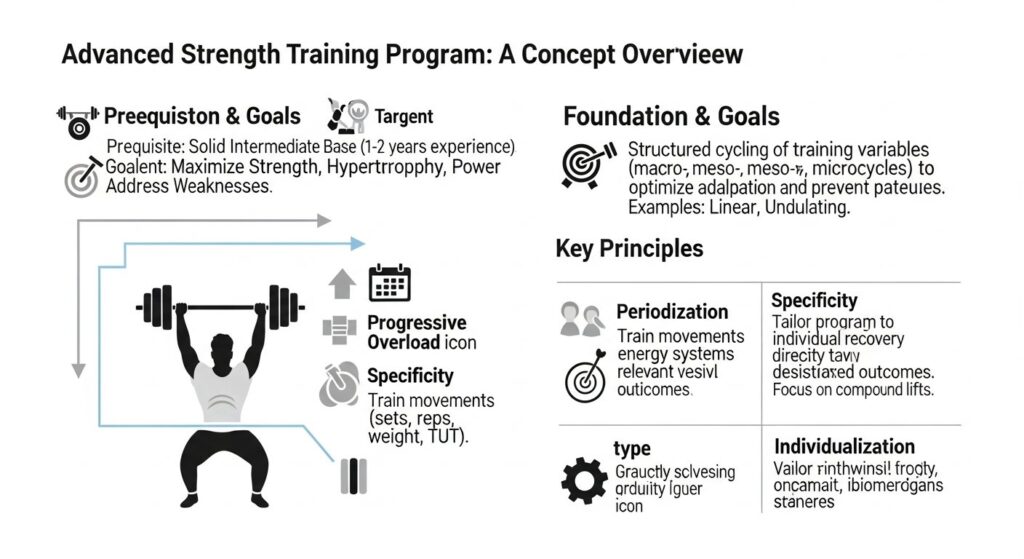
Moving past the beginner and intermediate phases of resistance training requires a fundamental shift in approach. A sophisticated strength program isn’t simply about lifting heavier weights; it’s about a strategic, individualized manipulation of training variables to elicit specific adaptations, manage fatigue, and prevent overtraining. It acknowledges that the body’s adaptive capacity diminishes with experience, necessitating more complex stimuli to continue progressing.
What’s the Difference Between Advanced, Beginner, and Intermediate Training?
Beginner programs focus on technique acquisition and neural adaptation, building a base of strength and muscle. Intermediate training introduces more volume and intensity, often employing linear progression models. However, an elite strength protocol elevates these concepts, recognizing that simple linear progression eventually stalls. Advanced lifters possess a refined kinesthetic awareness, a strong work ethic, and a deeper understanding of their body’s responses. They’re ready for programming that accounts for central nervous system fatigue, intricate energy system demands, and the fine art of recovery.
What are the Key Attributes of an Elite Strength Training Protocol?
The hallmark of a high-level strength training plan lies in its intricate design. It consistently integrates attributes like high intensity, precisely managed volume, varied frequency, and structured periodization. Furthermore, it emphasizes specificity to the lifter’s goals (maximal strength, power, hypertrophy), employs advanced training techniques, and places a paramount focus on meticulous recovery strategies. Metrics like RPE (Rate of Perceived Exertion) and RIR (Reps in Reserve) become indispensable tools for autoregulation, allowing for real-time adjustments based on daily performance and fatigue levels, thereby optimizing every training session.
How Does Progressive Overload Work in Advanced Strength Training?
While progressive overload remains the bedrock of all strength development, its application in advanced contexts becomes far more nuanced. Similarly, specificity evolves from merely ‘doing the movement’ to precisely engineering every aspect of training to mirror the exact demands of a lifter’s ultimate objective.
How Can Advanced Lifters Strategically Overload for Continued Adaptation?
For the advanced lifter, simply adding more weight to the bar every week is no longer a viable long-term strategy. Strategic overload involves manipulating a wider array of variables. This can include increasing training volume (more sets/reps over time), upping the frequency (training a muscle group more often), decreasing rest periods, improving lifting tempo (e.g., slower eccentric phases), increasing time under tension, enhancing exercise technique, or utilizing advanced training methods that allow for greater force production or fatigue accumulation within a single set. The key is to provide a novel stimulus without overwhelming the body’s recovery capacity, constantly seeking new pathways for adaptation.
How Do You Tailor Advanced Training for Specific Goals?
Specificity is paramount in a specialized strength program. If the goal is maximal strength, the program will heavily feature compound movements like squats, deadlifts, and bench presses, trained with high intensity (1-5 rep range) and longer rest periods. For muscle hypertrophy, the focus shifts to a higher volume, moderate intensity (6-12 rep range), and potentially a greater inclusion of isolation exercises. Power development, on the other hand, demands explosive movements at lower loads and very high velocity. An advanced program meticulously aligns exercise selection, rep ranges, intensity, and recovery to the precise physiological demands of the desired adaptation, leaving little to chance.

What is Periodization and Why is it Crucial for High-Level Strength Training?
Periodization is the systematic planning of athletic or physical training. For the advanced lifter, it’s not just an option but a necessity to manage training stress, optimize performance peaks, and prevent overtraining. It structures the training year into distinct phases, each with specific goals, leading to continuous adaptation and progression.
What is Linear Periodization for Strength Cycles?
Linear periodization, often the first model encountered, involves a gradual progression from high volume/low intensity to low volume/high intensity over a macrocycle (e.g., 12-16 weeks). For example, a lifter might start with a hypertrophy phase (higher reps), move to a strength phase (moderate reps), and culminate in a peaking phase (very low reps, maximal weight). While effective for strength development in less experienced lifters, its predictability can sometimes lead to plateaus in highly advanced individuals due to a lack of variety in stimuli.
How Does Undulating Periodization Offer Adaptability?
Undulating periodization, in contrast, varies training intensity and volume more frequently—daily or weekly. This could mean training heavy squats one day, moderate squats another, and lighter, higher-rep squats later in the week. This constant change provides varied stimuli, potentially enhancing adaptation and managing fatigue more effectively than linear models for some advanced lifters. It allows for more flexibility and can be particularly beneficial for athletes who need to maintain multiple physical qualities simultaneously.
What is Block Periodization and How Does it Work?
Block periodization is perhaps the most sophisticated model, breaking the training year into distinct “blocks” (e.g., accumulation, transmutation, realization). Each block focuses intensely on developing a specific physical quality (e.g., hypertrophy, maximal strength, power/peaking) while maintaining others. This highly specialized approach is common among elite athletes, allowing them to dedicate concentrated efforts to improving weaknesses or peaking for competitions. Recovery blocks and deload periods are meticulously integrated to ensure supercompensation and prevent burnout.
Periodization Model Comparison
| Model | Key Characteristic | Primary Goal | Best Application | Pros | Cons |
|---|---|---|---|---|---|
| Linear | Gradual shift from high volume/low intensity to low volume/high intensity. | Maximal Strength (peaking) | Beginner/Intermediate lifters, athletes with single competition peak. | Simple to implement, effective for foundational strength. | Predictable, potential for plateaus in advanced lifters. |
| Undulating (Daily/Weekly) | Frequent variation in intensity and volume. | Maintained multiple qualities, reduced accommodation. | Advanced lifters, athletes requiring varied stimuli. | Flexible, can manage fatigue, good for multiple goals. | Requires careful tracking, can be complex. |
| Block | Sequential, highly focused blocks on specific qualities. | Elite performance, specific competition peaking. | Elite athletes, highly specialized strength goals. | Highly effective for specific adaptations, clear focus. | High fatigue accumulation, requires careful sequencing and recovery. |
What Advanced Training Techniques Can Boost Performance?
Once the foundation of periodization is laid, an advanced resistance training plan incorporates specific techniques designed to increase training density, intensity, or time under tension, pushing muscle fibers to new levels of fatigue and adaptation.
What are Intensification Methods like Drop Sets and Supersets?
- Drop Sets: Performing a set to failure, then immediately reducing the weight and continuing with more reps. This extends the set and increases muscle damage and metabolic stress, promoting hypertrophy.
- Supersets: Performing two exercises back-to-back with no rest in between. Can be opposing muscle groups (e.g., bicep curl and tricep extension) or the same muscle group (pre-exhaustion). Great for increasing training density.
- Giant Sets: Similar to supersets, but involving three or more exercises performed consecutively for the same muscle group or body part. Maximize metabolic stress and pump.
- Forced Reps: Performing additional repetitions beyond failure with the assistance of a spotter. Utilized to further exhaust muscle fibers.
- Partial Reps: Performing reps over a limited range of motion, often at the strongest point of the lift or to accumulate more volume after full range failure.
How Do Cluster Sets and Rest-Pause Enhance Neuromuscular Performance?
- Cluster Sets: Breaking a set down into smaller mini-sets with short intra-set rest periods (e.g., 10-20 seconds). This allows lifters to perform more total repetitions with a heavier load than they could otherwise, enhancing power and maximal strength by reducing peripheral fatigue while maintaining high force output.
- Rest-Pause: Performing a set to failure, resting briefly (e.g., 10-15 seconds), and then performing a few more reps with the same weight. This maximizes the number of effective reps performed in a short time.
Why are Volume Cycling and Deload Strategies Important?
Even with advanced techniques, continuous progression isn’t linear. Volume cycling involves strategically varying the total amount of work performed (sets x reps x weight) over microcycles. Deloads are crucial for managing cumulative fatigue, particularly central nervous system fatigue, and allowing for full recovery and supercompensation. Typically, a deload involves significantly reducing volume (50-70%) and/or intensity (50-70% of usual working loads) for one week, usually every 4-6 weeks, or as dictated by fatigue levels and program design.

Advanced Training Techniques Overview
| Technique | Description | Primary Benefit | When to Use | Example |
|---|---|---|---|---|
| Drop Sets | Perform reps to failure, immediately drop weight, continue to failure. | Increased muscle hypertrophy, metabolic stress. | End of a workout or for isolation exercises. | Leg press to failure, drop 20%, continue. |
| Supersets | Two exercises back-to-back with no rest. | Increased training density, time efficiency. | Antagonistic muscles (e.g., chest/back) or pre-exhaustion. | Bench press followed by seated rows. |
| Cluster Sets | Break a set into mini-sets with short intra-set rests. | Enhanced power, maximal strength, higher total reps with heavy load. | Compound lifts for strength/power phases. | Squat 3 reps, rest 15s, 2 reps, rest 15s, 1 rep. |
| Rest-Pause | Set to failure, brief rest, then more reps with same weight. | Maximize effective reps, hypertrophy, strength endurance. | Compound or isolation exercises for pushing past limits. | Bicep curl to failure, rest 10s, perform 2-3 more reps. |
How Do Nutrition and Recovery Impact Advanced Strength Training Performance?
An elite strength protocol demands a level of nutritional and recovery discipline that matches the intensity of the training itself. Without these critical components, even the most perfectly designed program will yield suboptimal results and risk overtraining or injury.
What is Precision Nutrition for Elite Strength Athletes?
For advanced lifters, nutrition is not just about eating enough; it’s about precision. Protein intake is crucial for muscle repair and growth, with recommendations typically ranging from 1.6-2.2 grams per kilogram of bodyweight per day. Carbohydrates are the primary fuel source for high-intensity training, replenishing glycogen stores and supporting performance; intake should be adjusted based on training volume and intensity. Healthy fats are essential for hormonal health and overall well-being. Micronutrient density from a variety of whole foods supports immune function and cellular processes, which are critical when training at high volumes and intensities. Timing of nutrients, particularly around workouts (peri-workout nutrition), can also be optimized to maximize recovery and performance.
What is the Critical Role of Sleep and Active Recovery in Advanced Training?
Sleep is arguably the most potent recovery tool. During deep sleep, the body releases growth hormone, critical for muscle repair and adaptation. Advanced lifters often require 7-9 hours of quality sleep per night, and sometimes even more, especially during high-volume blocks. Active recovery, such as light cardio, stretching, or foam rolling, can improve blood flow, reduce muscle soreness, and aid in metabolic waste removal without adding significant stress. These modalities are integral to an advanced lifter’s regimen, preparing the body for subsequent intense sessions.
What Supplements Do Advanced Lifters Need to Know About?
While whole foods form the foundation, certain supplements can provide an edge for advanced lifters. Creatine monohydrate is extensively researched and proven to enhance strength, power, and muscle mass by increasing ATP regeneration. Whey protein is a convenient and effective way to meet protein targets. Beta-alanine can buffer lactic acid, improving high-intensity exercise capacity. Electrolytes are crucial for hydration, especially during intense, sweaty workouts. However, supplementation should always be viewed as a complement to, not a replacement for, a solid nutritional strategy. Reputable brands that provide third-party testing are always recommended.
How Do I Design a Customized Advanced Strength Training Regimen?
Crafting an individualized advanced weightlifting regimen requires careful consideration of the lifter’s unique characteristics, goals, and response to training. It’s an iterative process of planning, execution, and adjustment.
What are the Steps to Structure an Advanced Strength Training Program?
- **Define Your Macrocycle Goal:** What is the primary objective for the next 3-6 months (e.g., 5% increase in squat 1RM, add 5kg lean mass)?
- **Select a Periodization Model:** Based on your experience and goals, choose between undulating, block, or a hybrid model.
- **Outline Mesocycles:** Divide the macrocycle into 3-6 week blocks, each with a specific focus (e.g., hypertrophy accumulation, strength intensification, peaking).
- **Design Microcycles:** Within each mesocycle, structure weekly training. Determine training frequency (e.g., 3-5 days/week), split (e.g., upper/lower, full body), and daily exercise selection.
- **Prescribe Exercises, Sets, & Reps:** For each exercise, specify compound movements (squat, deadlift, bench, overhead press, rows) and relevant isolation work. Define target rep ranges, total sets, and RPE/RIR for each.
- **Integrate Advanced Techniques:** Strategically place drop sets, cluster sets, or other methods during intensification phases.
- **Plan Deloads & Active Recovery:** Schedule regular deload weeks and incorporate active recovery sessions.
- **Monitor & Adjust:** Regularly assess progress using performance metrics, RPE logs, and subjective feedback. Be prepared to modify the program based on individual response.
How Do You Monitor Progress with RPE and RIR in Advanced Training?
For advanced lifters, RPE (Rate of Perceived Exertion) and RIR (Reps in Reserve) are invaluable tools for autoregulation. An RPE scale (1-10, where 10 is maximal effort) helps gauge the intensity of a set. RIR specifies how many more reps you *could* have performed. For example, RPE 8 means you could have done 2 more reps (2 RIR). This allows for dynamic adjustment of training load based on daily fatigue, ensuring optimal stimulus without overreaching. If a planned set of 5 reps at RPE 8 feels like RPE 9 today, you might reduce the weight slightly or stop at 4 reps to stay within the intended fatigue zone.
What Does a Sample Advanced Strength Training Split Look Like?
This is a hypothetical 4-day split for an experienced lifter focusing on strength development within an undulating periodization model, with RPE/RIR targets as a guide. Actual weights and specific exercises will vary per individual.
| Day | Muscle Group/Focus | Exercise | Sets | Reps | RPE/RIR | Notes |
|---|---|---|---|---|---|---|
| Monday | Lower Body Strength (Heavy) | Back Squat | 4-5 | 3-5 | RPE 8-9 (1-2 RIR) | Focus on maximal force production. |
| Romanian Deadlift | 3 | 6-8 | RPE 7-8 (2-3 RIR) | Controlled eccentric. | ||
| Leg Press | 3-4 | 8-10 | RPE 8 (2 RIR) | Drop set on final set. | ||
| Tuesday | Upper Body Strength (Heavy) | Bench Press | 4-5 | 3-5 | RPE 8-9 (1-2 RIR) | Consider cluster sets for 1st/2nd set. |
| Barbell Row | 4 | 5-7 | RPE 8 (2 RIR) | Strict form. | ||
| Overhead Press | 3-4 | 5-7 | RPE 8 (2 RIR) | Controlled tempo. | ||
| Wednesday | Rest / Active Recovery | Light walk, foam rolling, stretching. | N/A | N/A | N/A | Prioritize sleep. |
| Thursday | Lower Body Hypertrophy (Moderate) | Front Squat | 3-4 | 6-8 | RPE 8 (2 RIR) | Focus on muscle contraction. |
| Glute-Ham Raise | 3-4 | 8-12 | RPE 9 (1 RIR) | Controlled movement. | ||
| Walking Lunges | 3 | 10-12/leg | RPE 8 (2 RIR) | Emphasis on mind-muscle connection. | ||
| Friday | Upper Body Hypertrophy (Moderate) | Incline Dumbbell Press | 3-4 | 8-12 | RPE 8-9 (1-2 RIR) | Superset with Face Pulls. |
| Pull-ups/Lat Pulldowns | 3-4 | 8-12 | RPE 8-9 (1-2 RIR) | Controlled eccentric. | ||
| Dumbbell Lateral Raise | 3-4 | 12-15 | RPE 9 (1 RIR) | High volume, focus on shoulders. | ||
| Saturday/Sunday | Rest / Active Recovery | Flexibility, light movement. | N/A | N/A | N/A | Meal prep, mental recovery. |
How Can I Overcome Advanced Strength Training Plateaus?
Plateaus are an inevitable part of the advanced strength journey. What separates advanced lifters is their ability to identify the causes of stagnation and implement strategic changes to break through them, rather than simply pushing harder.
How Do You Identify the Root Cause of Training Stagnation?
The first step in breaking a plateau is diagnosis. Is it genuine physiological adaptation resistance, or a symptom of accumulated fatigue?
- **Insufficient Recovery:** Are you getting enough sleep? Is your nutrition lacking? Are you taking adequate deloads? Often, the solution isn’t more training, but more recovery.
- **Lack of Novel Stimulus:** Have you been doing the same program for too long? Your body may have fully adapted.
- **Over-reliance on One Variable:** Are you only trying to add weight? Other forms of progressive overload (volume, tempo, advanced techniques) might be neglected.
- **Technique Flaws:** As weights get heavier, subtle technique breakdowns can limit progress or increase injury risk.
- **Mental Fatigue/Burnout:** Constant high intensity can lead to psychological exhaustion, reducing effort and focus.
- **Nutritional Deficiencies:** Inadequate calorie intake, particularly protein or carbohydrates, can halt progress.
What are Strategies for Breaking Through Training Plateaus?
Once the cause is identified, specific interventions can be applied:
- **Extended Deload:** A longer deload (e.g., 2 weeks) or a complete break might be necessary for profound CNS fatigue.
- **Program Overhaul:** Implement a completely different training split, periodization model, or focus. If you’ve been doing high volume, switch to lower volume/higher intensity, or vice versa.
- **Focus on Weaknesses:** Dedicate a mesocycle to improving a specific muscle group or lift that is lagging. For example, if your bench press is stuck, add more specific accessory work for triceps and shoulders.
- **Technique Refinement:** Record your lifts, have a coach review them, and actively drill perfect form with lighter weights.
- **Advanced Techniques:** Strategically integrate new intensification methods (e.g., cluster sets for strength, drop sets for hypertrophy) to provide a novel stimulus.
- **Nutritional Audit:** Re-evaluate calorie, protein, and carbohydrate intake. Consider a slight increase if you are in a deficit or maintaining.
- **Stress Management:** Address non-training stressors through mindfulness, hobbies, or spending time in nature.
How Can Advanced Lifters Prioritize Injury Prevention and Long-Term Health?
At an advanced level, injury prevention becomes even more critical. Listen to your body and differentiate between muscle soreness and joint pain. Implement proper warm-ups, cool-downs, and regular mobility work. Don’t chase numbers at the expense of form. Incorporate pre-habilitation exercises for common weak points (e.g., rotator cuff work, glute activation). A smart advanced strength training program prioritizes longevity over short-term gains, ensuring you can continue lifting effectively for years to come.
Sources & References
- Zourdos, M. C., et al. “Novel Periodization Protocol for Maximizing Strength Adaptations in Resistance-Trained Subjects.” Journal of Strength and Conditioning Research, vol. 30, no. 12, Dec. 2016, pp. 3205-3213.
- Haff, G. G., and N. T. Triplett. Essentials of Strength Training and Conditioning. 4th ed., Human Kinetics, 2016.
- Schoenfeld, B. J. Science and Development of Muscle Hypertrophy. 2nd ed., Human Kinetics, 2020.
- International Society of Sports Nutrition position stand: protein and exercise. Journal of the International Society of Sports Nutrition, 2017.
- Pareja-Blanco, F., et al. “Effects of cluster sets on body composition, strength, and power in resistance-trained individuals.” Journal of Strength and Conditioning Research, vol. 31, no. 12, Dec. 2017, pp. 3360-3367.
About the Author
Dr. Alex Sharma, Certified Strength & Conditioning Specialist (CSCS) & Exercise Physiologist — Dr. Sharma brings over a decade of experience in designing and implementing advanced strength and conditioning programs for athletes and high-level lifters, focusing on evidence-based practices for peak performance and injury prevention.
Reviewed by Sarah Chen, Exercise Physiologist — Last reviewed: March 27, 2026
For more insights into optimizing your physical performance and general well-being, explore our Physical Health & Fitness section.
Reviewed by Marcus ‘Mighty’ Grant, Cultural Wellness Journalist — Last reviewed: March 27, 2026