
Thriving Through Turbulence: Your 2026 Guide to Calming Anxiety and Cultivating Inner Peace
Understanding Anxiety: More Than Just ‘Nerves’
Before we dive into techniques, it’s crucial to understand what anxiety truly is. It’s more than just feeling a bit stressed or nervous before a big presentation. Anxiety is a natural human emotion, a fundamental part of our “fight, flight, or freeze” survival mechanism. In ancient times, this response was vital for escaping danger. Today, however, our brains often trigger this same powerful response to non-life-threatening situations – a looming deadline, a difficult conversation, or even just the endless scroll of social media.
When anxiety becomes chronic or overwhelming, it shifts from being a helpful warning system to a debilitating force. It can manifest physically as a racing heart, shortness of breath, muscle tension, or digestive issues. Mentally, it can lead to constant worry, difficulty concentrating, irritability, and sleep disturbances. Research consistently shows that while acute stress can be motivating, prolonged anxiety can negatively impact our physical health, cognitive function, and overall well-being. Recognizing these signs and understanding that anxiety is a complex interplay of mind, body, and environment is the first step towards managing it effectively. It’s not a weakness; it’s a signal, and we can learn to interpret and respond to that signal with wisdom and compassion.
Mindfulness & Breathwork: Anchoring Yourself in the Present
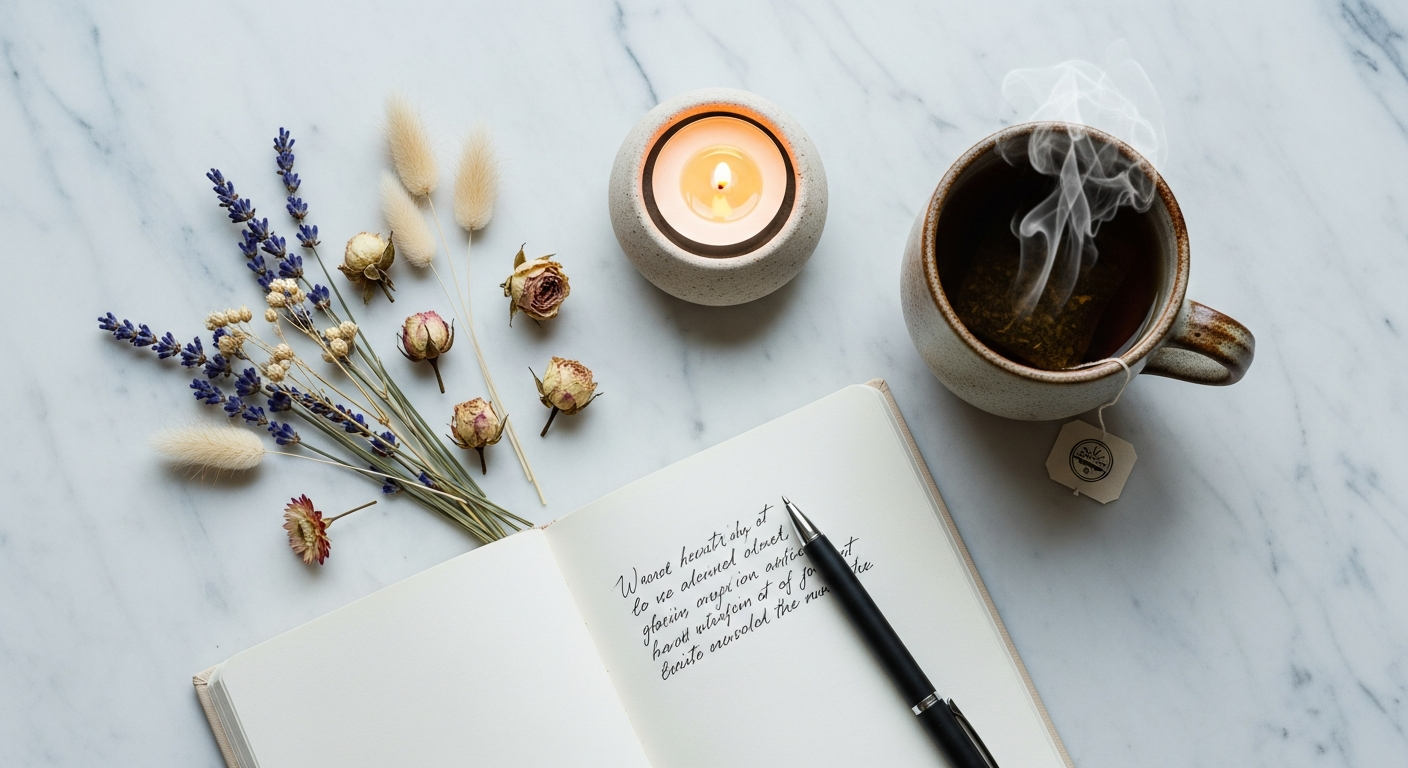
One of the most immediate and profound ways to counteract anxiety is by bringing your awareness back to the present moment and regulating your breath. Anxiety often pulls us into worries about the future or regrets about the past. Mindfulness and conscious breathing act as powerful anchors, grounding you in the ‘now’ where anxiety loses its grip.
Deep Diaphragmatic Breathing (Belly Breathing)
This is more than just taking a deep breath; it’s about engaging your diaphragm, a muscle crucial for deep respiration. Research has shown that diaphragmatic breathing activates the vagus nerve, which in turn stimulates the parasympathetic nervous system – your body’s “rest and digest” mode. This directly counteracts the “fight or flight” response.
Step-by-Step Guidance:
1. Find a comfortable position: Lie down or sit upright with your back supported. Place one hand on your chest and the other on your belly, just below your rib cage.
2. Inhale deeply through your nose: Feel your belly rise, pushing your hand outwards. Your chest should remain relatively still.
3. Exhale slowly through your mouth (or nose): Gently contract your abdominal muscles, feeling your belly flatten as the air leaves your lungs. Make your exhale slightly longer than your inhale.
4. Repeat: Aim for 5-10 minutes, focusing solely on the sensation of your breath and the movement of your belly.
Realistic Example: The next time you feel a knot of anxiety tighten in your stomach before a meeting or a challenging task, excuse yourself for a few minutes, find a quiet spot, and practice 5 rounds of belly breathing. You’ll be amazed at how quickly your physiology shifts.
The 5-4-3-2-1 Grounding Technique
This simple yet effective technique uses your five senses to bring you back to the present moment when anxiety threatens to overwhelm you. It interrupts the cycle of anxious thoughts by redirecting your focus outwards.
Step-by-Step Guidance:
1. 5: Notice five things you can see. Look around your environment. Name them silently or aloud. (e.g., “I see the blue sky, the green leaves, my coffee cup, a pen, a picture on the wall.”)
2. 4: Notice four things you can feel. Pay attention to tactile sensations. (e.g., “I feel the chair beneath me, my feet on the floor, the texture of my shirt, the warmth of my hands.”)
3. 3: Notice three things you can hear. Tune into sounds around you. (e.g., “I hear birds chirping, the hum of the computer, my own breathing.”)
4. 2: Notice two things you can smell. Take a deliberate sniff. (e.g., “I smell my coffee, the faint scent of rain.”) If you can’t smell anything, name two pleasant smells you associate with comfort.
5. 1: Notice one thing you can taste. (e.g., “I taste the lingering flavor of my breakfast.”) If you can’t taste anything, name one pleasant taste you remember.
Realistic Example: When you’re in a crowded place and feel a wave of panic rising, discreetly run through the 5-4-3-2-1 exercise. It will help anchor you without drawing attention.
Mindful Meditation (Short Bursts)
Mindfulness meditation is the practice of paying attention to the present moment without judgment. Even short bursts can have significant benefits. Studies published in journals like JAMA Internal Medicine have demonstrated that mindfulness meditation can reduce symptoms of anxiety and depression, and even lead to changes in brain regions associated with emotion regulation, like the amygdala.
Step-by-Step Guidance:
1. Find a quiet spot: Sit comfortably, hands resting in your lap, eyes gently closed or softly gazing downwards.
2. Focus on your breath: Notice the sensation of each inhale and exhale. Don’t try to control it, just observe.
3. Acknowledge thoughts: When your mind wanders (and it will!), gently acknowledge the thought without judgment, then guide your attention back to your breath.
4. Start small: Begin with just 2-5 minutes a day. Use a guided meditation app if it helps.
Realistic Example: Instead of immediately checking your phone first thing in the morning, dedicate 3 minutes to mindful breathing or a short guided meditation. This sets a calm tone for your entire day.
Cognitive Reframing: Shifting Your Inner Dialogue
Anxiety is often fueled by our thoughts. We tend to get caught in cycles of negative or catastrophic thinking, creating scenarios in our minds that may never happen. Cognitive Reframing, a core principle of Cognitive Behavioral Therapy (CBT), teaches us to identify these thought patterns and challenge them, replacing them with more balanced and realistic perspectives. This isn’t about “positive thinking” in a superficial way, but about developing a more accurate and helpful internal narrative.
Identifying Automatic Negative Thoughts (ANTs)
Our minds are constantly generating thoughts, many of which are automatic and unconscious. When anxious, these often lean towards the negative. Becoming aware of these ANTs is the first step.
Step-by-Step Guidance:
1. Become a thought detective: Throughout your day, especially when you feel a surge of anxiety, pause and ask yourself: “What thoughts are going through my mind right now?”
2. Write them down: Keep a small notebook or use a note-taking app. Jot down the thought exactly as it appears, even if it seems irrational. Examples: “I’m going to mess this up,” “Everyone thinks I’m incompetent,” “This feeling will never go away.”
3. Look for patterns: Over time, you’ll start to notice recurring themes or types of ANTs (e.g., catastrophizing, mind-reading, all-or-nothing thinking).
Realistic Example: You’re about to give a presentation, and the thought “I’m definitely going to freeze and forget everything” pops into your head. Write it down. Simply observing it without judgment is powerful.
Challenging and Reframing Thoughts
Once you’ve identified an ANT, the next step is to question its validity and explore alternative perspectives.
Step-by-Step Guidance:
1. Question the evidence: For each ANT, ask yourself: “Is this thought 100% true? What evidence do I have to support it? What evidence contradicts it?”
2. Consider alternative explanations: “Could there be another way to look at this situation?” “What would a trusted friend say about this?”
3. Reframe the thought: Replace the negative thought with a more balanced, realistic, or helpful one. This isn’t about forced positivity, but about finding a more accurate perspective.
Realistic Example:
* Original ANT: “I’m going to freeze and forget everything during my presentation.”
* Challenge: “Have I ever frozen completely before? No, usually I just get a bit nervous. Have I prepared? Yes, thoroughly. Is it possible I might forget a minor detail? Yes, but I can improvise or refer to my notes. Will it be a catastrophe? Unlikely.”
* Reframe: “I’ve prepared well for this presentation. It’s normal to feel nervous, but I’m capable of delivering it effectively. Even if I stumble, I can recover, and it won’t diminish my overall effort.”
The “So What?” Technique for Catastrophic Thinking
When your mind spirals into worst-case scenarios, this technique can help you break the cycle.
Step-by-Step Guidance:
1. Identify the fear: What’s the absolute worst thing that could happen?
2. Ask “So what?”: If that worst-case scenario did happen, what would be the next consequence? Keep asking “So what?” until you reach a point where you can reasonably cope.
3. Focus on coping: This isn’t about denying the possibility of negative outcomes, but about recognizing your capacity to handle them.
Realistic Example:
* Fear: “I’m going to get fired.”
* So what? “Then I’d have to find a new job.”
* So what? “That would be stressful, but I have marketable skills and a network of contacts.”
* So what? “I might have to tighten my budget for a while, but I could manage. I’ve faced challenges before and overcome them.”
* Outcome: You realize that even the “worst-case” isn’t an unmanageable catastrophe, and you have resources to cope.
Movement & Nature: Releasing Tension and Reconnecting

Our bodies and minds are intimately connected. Anxiety often manifests as physical tension, and physical activity is a powerful antidote. Beyond structured exercise, reconnecting with nature offers profound calming benefits, a concept increasingly supported by scientific research.
Regular Physical Activity
You don’t need to become an Olympic athlete. Even moderate, consistent movement can significantly reduce anxiety symptoms. Exercise releases endorphins, natural mood boosters, and helps to reduce cortisol, the stress hormone. It also provides a healthy outlet for pent-up energy and tension.
Step-by-Step Guidance:
1. Choose something you enjoy: Walking, dancing, cycling, swimming, yoga, gardening – the key is consistency.
2. Start small: Aim for 20-30 minutes, three to five times a week. Even 10-minute bursts throughout the day add up.
3. Make it a habit: Schedule your activity like an important appointment.
Realistic Example: Instead of sitting through your entire lunch break, take a brisk 15-minute walk around the block. You’ll return feeling refreshed and less tense. If you’re feeling overwhelmed, try putting on your favorite reggae tunes and dancing around your living room for 10 minutes – movement paired with uplifting music can be incredibly therapeutic.
Spending Time in Nature (Forest Bathing/Shinrin-Yoku)
The Japanese practice of “Shinrin-Yoku,” or forest bathing, is more than just a walk in the woods; it’s about mindfully immersing yourself in the atmosphere of nature. Numerous studies, including those published in Environmental Health and Preventative Medicine, show that spending time in green spaces can lower blood pressure, reduce stress hormones, improve mood, and boost immune function.
Step-by-Step Guidance:
1. Find a natural setting: A park, a forest, a beach, or even a quiet garden.
2. Leave distractions behind: Put your phone on silent and resist the urge to check emails or social media.
3. Engage your senses: Walk slowly, noticing the sights (colors, patterns of leaves), sounds (rustling leaves, birdsong), smells (earth, pine), and sensations (breeze on your skin, texture of bark).
4. No agenda: Don’t aim for a specific distance or speed. Just be present.
Realistic Example: On a particularly stressful day, commit to spending 15 minutes sitting on a park bench, just observing the trees, listening to the birds, and feeling the sun or breeze. Even this short connection can make a difference.
Progressive Muscle Relaxation (PMR)
Anxiety often manifests as chronic muscle tension, which we might not even consciously notice. PMR teaches you to identify and release this tension by systematically tensing and then relaxing different muscle groups throughout your body.
Step-by-Step Guidance:
1. Find a quiet place: Lie down or sit comfortably.
2. Begin with your feet: Tense the muscles in your toes, hold for 5-10 seconds, then completely relax them. Notice the difference between tension and relaxation.
3. Work your way up: Move to your calves, thighs, glutes, abdomen, chest, arms, hands, shoulders, neck, jaw, and forehead. For each group, tense, hold, and then relax.
4. Breathe deeply: Maintain slow, deep breathing throughout the exercise.
Realistic Example: Before bed, if you’re feeling restless and tense, a full PMR session can help you unwind and prepare your body for sleep, reducing night-time anxiety.
Building a Resilient Lifestyle: Holistic Habits for Lasting Calm
Managing anxiety isn’t just about crisis intervention; it’s about cultivating a lifestyle that supports your mental and emotional well-being every day. These holistic habits form the bedrock of lasting resilience.
Prioritizing Quality Sleep
Sleep deprivation and anxiety are locked in a vicious cycle. Lack of sleep can exacerbate anxiety, making you more reactive to stress, while anxiety can make it harder to fall and stay asleep. Prioritizing quality sleep is non-negotiable for mental health.
Step-by-Step Guidance (Sleep Hygiene):
1. Stick to a schedule: Go to bed and wake up at roughly the same time every day, even on weekends.
2. Create a relaxing bedtime routine: A warm bath, reading a book, gentle stretching, or listening to calming music.
3. Optimize your sleep environment: Keep your bedroom dark, quiet, and cool.
4. Limit stimulants: Avoid caffeine and heavy meals close to bedtime.
5. Wind down screen time: The blue light from screens can interfere with melatonin production.
Realistic Example: If you typically scroll on your phone until you fall asleep, try switching to reading a physical book for 30 minutes before bed. Notice how your body feels more ready for rest.
Mindful Nutrition
The connection between your gut and your brain is profound, often referred to as the “gut-brain axis.” What you eat can directly impact your mood and anxiety levels. A diet rich in whole foods, fiber, and healthy fats can support a healthy gut microbiome, which in turn influences neurotransmitter production. Conversely, excessive sugar, processed foods, and caffeine can contribute to mood swings and heightened anxiety.
Step-by-Step Guidance:
1. Focus on whole foods: Emphasize fruits, vegetables, whole grains, lean proteins, and healthy fats.
2. Stay hydrated: Dehydration can mimic or worsen anxiety symptoms.
3. Limit processed foods, sugar, and excessive caffeine: These can cause blood sugar spikes and crashes, contributing to anxiety.
4. Consider probiotics: Fermented foods (yogurt, kimchi, sauerkraut) or a high-quality probiotic supplement can support gut health.
Realistic Example: Instead of reaching for a sugary snack when stress hits, try having a handful of almonds or a piece of fruit. Notice if it helps stabilize your energy and mood more effectively.
Cultivating Connection & Community
Humans are social beings. Strong social connections are a powerful buffer against stress and anxiety. Feeling understood, supported, and loved provides a sense of belonging that can significantly improve mental well-being.
Step-by-Step Guidance:
1. Prioritize relationships: Make time for friends, family, and loved ones who uplift you.
2. Reach out: Don’t hesitate to share your feelings with a trusted confidant.
3. Join a community: Whether it’s a book club, a volunteer group, a sports team, or a spiritual community, finding like-minded people can combat feelings of isolation.
4. Practice active listening: When you connect, truly listen and be present for others, fostering deeper bonds.
Realistic Example: If you’ve been feeling isolated, commit to reaching out to one friend you haven’t spoken to in a while for a quick chat or coffee. Even small connections can make a big difference.
Setting Boundaries and Practicing Self-Compassion
In our interconnected world, it’s easy to overcommit, say “yes” when we mean “no,” and constantly compare ourselves to others. Setting healthy boundaries and practicing self-compassion are vital for protecting your mental energy and fostering inner peace.
Step-by-Step Guidance:
1. Identify your limits: Understand how much you can realistically take on without feeling overwhelmed.
2. Learn to say “no”: It’s okay to decline requests that will overextend you. You can do so kindly but firmly.
3. Protect your time: Schedule downtime and self-care activities as non-negotiables.
4. Talk to yourself like a friend: When you make a mistake or feel anxious, instead of self-criticism, offer yourself the same kindness and understanding you would give to a dear friend.
5. Practice self-care rituals: Engage in activities that genuinely recharge you, whether it’s reading, listening to music, or taking a long bath.
Realistic Example: If your calendar is packed, and a new request comes in, practice saying, “Thank you for thinking of me, but I’m unable to take that on right now.” Then, instead of dwelling on perceived guilt, acknowledge your decision with self-compassion.