Reggae for Meditation: Find Your Inner Calm
Venturing into the realm of sound to cultivate inner peace, many are discovering a profound pathway in music. Reggae for meditation is a powerful and increasingly recognized practice, leveraging the genre’s unique rhythmic patterns, spiritual depth, and Caribbean-inspired ethos to cultivate mindfulness, reduce stress, and promote holistic well-being. This approach offers a distinct sonic landscape, guiding individuals toward enhanced meditative states and inner peace.
What is Meditative Reggae Music?
Defining the Practice: Finding Zen in the One-Drop
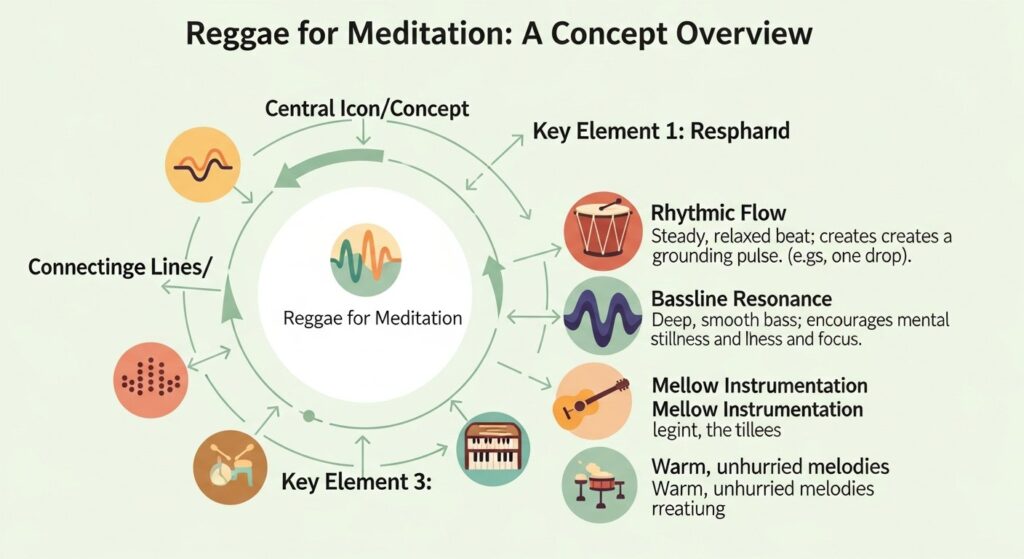
Meditative reggae music is not merely background sound; it is an active partner in the journey to introspection. It involves intentionally using reggae’s characteristic elements—its distinctive rhythm, deep bass frequencies, and often conscious, spiritually-infused lyrics—as a focal point for concentration. Unlike ambient music designed to fade into the background, reggae commands attention with its vibrant yet calming pulse. This practice aims to synchronize breath with rhythm, allowing the mind to quiet and the body to relax, drawing upon the genre’s inherent grounding qualities and uplifting vibrations.
What is the Core Appeal of Reggae for Inner Peace?
The spiritual roots of reggae, deeply embedded in Caribbean wellness traditions, provide a natural pathway to inner peace. Born from the vibrant culture and history of Jamaica, reggae music frequently explores themes of unity, resilience, and spiritual awakening. This thematic coherence, combined with its distinctive musical structure, makes it particularly conducive to deep reflective states. The music’s unhurried tempo invites listeners to slow down, while its foundational basslines offer an anchoring presence, fostering a sense of stability during meditation. Integrating this rich musical heritage, practitioners find an authentic connection to a tradition of holistic well-being.
What Unique Sonic Elements in Reggae Foster Inner Calm?
To understand why meditative reggae music is so effective for mental and physical harmony, we must first examine the core musical and cultural elements that differentiate it from other genres. These unique attributes contribute directly to its capacity to induce calm and focus, making it an excellent companion for those seeking inner stillness.
What are the Rhythmic Foundations of Reggae, like the One-Drop and Skank?
Central to reggae’s meditative impact is its distinctive rhythmic structure. The “one-drop beat,” pioneered by drummers like Carlton Barrett of The Wailers, places the primary snare and bass drum hits on the third beat of a 4/4 measure, creating a syncopated, laid-back feel. This subtly delayed pulse encourages a relaxed yet attentive state, subtly drawing the listener into the present moment without urgency. Complementing this, the “skank” rhythm, typically played by guitar or keyboard, emphasizes the off-beats (the “upstrokes”), providing a light, airy counterpoint that adds to the music’s characteristic buoyancy. These combined rhythms prevent mental stagnation, gently propelling consciousness forward without creating stress.
How Do Deep Reggae Basslines Provide Grounding Frequencies?
The bassline in reggae music is not merely supportive; it is a foundational entity that often carries the primary melody and emotional weight. Performed by legendary artists like Aston “Family Man” Barrett, these deep, resonant frequencies often sit between 60-120 Hz, known to elicit a profound physical and emotional response. These low-frequency vibrations are particularly grounding, providing a palpable anchor that helps to quiet the mind and center the body. The consistent, pulsing nature of a reggae bassline can feel like a gentle, internal massage, promoting a sense of security and stability essential for deeper meditative states.
What Lyrical Themes in Reggae Promote Spirituality and Consciousness?
Many reggae compositions, particularly in the Roots Reggae subgenre, feature lyrics that are rich in spiritual depth, social commentary, and calls for unity and peace. Influenced heavily by Rastafarianism, these songs frequently invoke themes of Jah (God), natural living, perseverance through adversity, and universal love. Artists like Bob Marley, Peter Tosh, and Burning Spear crafted narratives that encourage introspection, self-awareness, and a connection to a higher purpose. When used for mindfulness or guided meditation, these lyrical themes can provide powerful affirmations and a framework for contemplative thought, guiding the mind toward positive affirmations and a broader sense of interconnectedness.
How Do Reggae’s Tempo and Repetition Create Hypnotic Effects?
The typical tempo of traditional reggae ranges from a relaxed 60 to 90 beats per minute (BPM), a pace that closely aligns with the human heart rate at rest. This moderate tempo, combined with the genre’s often repetitive and cyclical musical phrases, creates a hypnotic effect. Such repetition allows the listener to settle into a rhythm, enabling the analytical mind to disengage and the subconscious to emerge. This sustained, gentle sonic environment helps induce alpha brain waves, associated with relaxed wakefulness and a state of readiness for meditation.

What are the Scientific Benefits of Reggae for Meditation?
The integration of reggae music into meditative practices offers a spectrum of benefits, ranging from physiological improvements to enhanced emotional and spiritual well-being. Understanding these tangible advantages can deepen one’s appreciation for rhythmic relaxation with reggae as a holistic wellness tool.
How Does Reggae Aid in Stress Reduction and Affect the Autonomic Nervous System?
Listening to calming music, especially that with a consistent, moderate tempo like reggae, has been shown to positively influence the autonomic nervous system. It stimulates the parasympathetic nervous system, responsible for the body’s “rest and digest” functions, thereby reducing the activity of the sympathetic nervous system, which triggers the “fight or flight” response. This physiological shift leads to a decrease in stress hormones like cortisol, lowering heart rate variability, and promoting deeper, more regulated breathing. The grounding basslines and steady rhythm act as a non-pharmacological anxiolytic, aiding in the release of accumulated tension.
Can Reggae Enhance Focus and Cognitive Clarity?
The repetitive yet intricate nature of reggae rhythms can act as an anchor for attention, helping to quiet internal chatter and enhance concentration. For individuals struggling with a wandering mind during mindfulness sessions, the consistent pulse of reggae provides a gentle focal point. This sustained auditory engagement promotes the production of alpha brain waves, which are associated with a relaxed but alert mental state, improving overall cognitive clarity and the ability to maintain present-moment awareness without distraction.
How Does Reggae Support Emotional Regulation and Mood Elevation?
Reggae’s Calming Influence extends deeply into the emotional landscape. The genre’s uplifting melodies, positive lyrical affirmations, and inherent feel-good vibe can significantly impact mood. It encourages the release of neurochemicals such as serotonin and dopamine, natural mood elevators. This makes it particularly effective for emotional regulation, helping to alleviate symptoms of anxiety, sadness, and irritability, fostering a more optimistic and peaceful outlook.
How Does Reggae Foster Spiritual Connection and Mindfulness?
Beyond the physiological and psychological, spiritual reggae for inner peace provides a conduit for deeper self-reflection and spiritual awareness. Many find that the consciousness-raising themes in reggae lyrics, combined with its expansive soundscapes, facilitate a connection to something larger than oneself. This can deepen mindfulness practices by expanding awareness beyond the individual, encouraging compassion, gratitude, and a sense of belonging to a universal rhythm.
What are the Key Benefits of Reggae for Mindfulness?
- **Stress Reduction:** Lowers cortisol levels and promotes relaxation.
- **Enhanced Focus:** Acts as an auditory anchor, improving concentration.
- **Emotional Regulation:** Elevates mood and reduces anxiety symptoms.
- **Spiritual Connection:** Fosters introspection and a sense of universal unity.
- **Physical Relaxation:** Decreases heart rate and muscle tension.
- **Improved Sleep Quality:** Aids in calming the mind before rest.
- **Pain Management:** Distracts from chronic pain and discomfort.
Table 2: Benefits of Reggae Meditation (EAV Structure)
| Attribute (Benefit) | Entity (Mechanism/Effect) | Value (Description/Impact) |
|---|---|---|
| Stress Reduction | Parasympathetic Nervous System Activation | Calms the body’s “fight or flight” response, reducing cortisol and promoting relaxation. |
| Enhanced Focus | Alpha Brain Wave Induction | Cultivates a state of relaxed alertness, improving concentration and reducing mental chatter. |
| Emotional Regulation | Neurotransmitter Release (Serotonin, Dopamine) | Elevates mood, reduces anxiety, and fosters feelings of contentment and well-being. |
| Spiritual Connection | Conscious Lyrical Themes / Rhythmic Entrainment | Facilitates introspection, a sense of unity, and deeper engagement with existential questions. |
| Physical Relaxation | Heart Rate Variability (HRV) Improvement | Promotes rhythmic breathing and a stable heart rate, easing muscle tension and promoting bodily calm. |
How Can You Integrate Reggae into Your Meditative Practice?
To harness these profound benefits, integrating reggae into your meditation routine requires specific approaches. This section provides practical advice on how to effectively incorporate island-inspired meditation music into various forms of contemplative practice, ensuring a deeply immersive and transformative experience.
How Do You Set the Ambiance for Reggae Meditation?
Creating a conducive environment is the first step. Choose a quiet, comfortable space where you won’t be disturbed. Dim lighting, perhaps some natural light filtering in, can enhance the mood. Consider using aromatherapy with essential oils like sandalwood or lavender to further deepen relaxation. Ensure your audio system provides clear sound quality, allowing the rich textures of the reggae music, especially the deep basslines, to resonate fully without distortion. This careful preparation respects the immersive power of the sound.
How Do You Select the Right Reggae Tracks for Meditation?
The choice of reggae tracks significantly impacts the meditative experience. Look for instrumental tracks or those with minimal, spiritually uplifting lyrics that don’t demand too much cognitive processing. Subgenres like Dub, instrumental Roots Reggae, or even some Lo-Fi Reggae mixes can be ideal. Pay attention to the tempo—tracks between 60-80 BPM are often best for inducing deep relaxation. Experiment with different artists and styles to discover what resonates most deeply with your personal energy and meditative goals.
What are the Steps to Integrate Reggae into Your Meditation Practice?
- Define Your Intention: Before beginning, establish what you seek from your session—be it stress reduction, enhanced focus, or spiritual connection.
- Create Your Sanctuary: Set up a comfortable, quiet space. Eliminate distractions and ensure good quality audio playback.
- Curate Your Playlist: Select reggae tracks (instrumental or lyrically gentle) known for their calming rhythms and positive vibrations. Consider duration to match your meditation length.
- Begin with Centering Breath: Sit or lie comfortably. Close your eyes (or soften your gaze). Take several deep, slow breaths, focusing on the rise and fall of your abdomen.
- Tune into the Rhythm: As the music begins, allow yourself to be absorbed by its pulse. Notice the one-drop beat, the grounding bassline, and the gentle skank.
- Synchronize Breath and Beat: Gently try to match your breath to the music’s rhythm. Inhale for a measure, exhale for a measure, or find a natural cadence that feels harmonious.
- Observe Thoughts Without Judgment: When thoughts arise, acknowledge them without engagement, and gently redirect your awareness back to the music and your breath.
- Engage the Senses: Allow the vibrations of the bass to resonate in your body. Notice the textures of the sounds.
- Conclude Mindfully: As your session nears its end, gradually bring your awareness back to the room. Take a few final deep breaths, slowly open your eyes, and carry the sense of calm into your day.
What Common Mistakes Should You Avoid in Reggae Meditation?
While the concept of meditative reggae music is simple, certain pitfalls can detract from the experience. Avoid overly busy or aggressive subgenres like Dancehall, which are designed for high energy, not calm. Don’t fall into the trap of passive listening; instead, actively engage with the sound as your meditative anchor. Resist the urge to constantly check your phone or multitask; dedicate this time fully to your practice. Finally, don’t force a connection; if a particular track or style doesn’t resonate, simply switch to another until you find one that genuinely fosters inner peace.

What Reggae Subgenres Offer Diverse Meditative Experiences?
The diverse landscape of reggae music offers a rich palette of sounds, each capable of evoking different meditative states. Understanding these variations allows you to tailor your selection to your specific needs, enhancing your rhythmic relaxation with reggae.
How Does Roots Reggae Provide Spiritual Grounding?
Roots Reggae, the classic form of the genre, is perhaps the most universally recognized for its spiritual depth and cultural significance. Characterized by its moderate tempo, prominent basslines, and often politically and spiritually conscious lyrics, it provides a powerful sense of grounding. Artists like Bob Marley, Burning Spear, and Culture offer tracks that resonate with a deep sense of purpose and resilience, ideal for meditations focused on strength, community, and spiritual connection. The organic instrumentation and rich vocal harmonies foster a sense of warmth and familiarity, making it an excellent choice for general mindfulness and heart-centered practices.
How Does Dub Music Create Immersive Meditative Soundscapes?
Dub music, a subgenre that emerged from Roots Reggae, focuses heavily on instrumental textures, reverb, echo, and studio effects. Pioneers like King Tubby and Lee “Scratch” Perry transformed existing reggae tracks into expansive, almost psychedelic soundscapes. This deconstructed approach creates an immersive auditory environment, where individual sounds float and swirl, inviting deep contemplation. Dub is particularly effective for sound bath meditations, sensory deprivation, or when you wish to explore altered states of consciousness without lyrical distractions. Its spaciousness allows the mind to wander freely yet remain anchored by the rhythmic core.
How Can Lover’s Rock Offer Gentle Rhythms for Relaxation?
Lover’s Rock is a softer, more melodic subgenre of reggae, characterized by its romantic lyrical themes and smoother vocal delivery. While the lyrical focus might not always be spiritual, the gentle rhythms, often slower tempos, and lush arrangements make it highly conducive to relaxation. Artists like Dennis Brown and Gregory Isaacs crafted timeless tracks that are perfect for unwinding after a long day, preparing for sleep, or for meditations focused on self-love and emotional healing. The less pronounced basslines and often acoustic instrumentation provide a comforting, unobtrusive backdrop for peaceful reflection.
What Modern Reggae Adaptations, like Fusion and Instrumental, are Good for Meditation?
The evolving nature of reggae has led to various fusion genres and purely instrumental forms that also offer excellent options for meditation. Reggae Fusion often incorporates elements from jazz, world music, or even ambient genres, creating sophisticated and innovative soundscapes. Instrumental reggae tracks, whether traditional or modern, remove any lyrical distractions entirely, allowing the listener to focus purely on the musicality and rhythmic flow. These modern adaptations can provide a fresh perspective for seasoned meditators or appeal to those who prefer a more contemporary sound while still seeking the core benefits of reggae’s calming influence.
Table 1: Reggae Subgenres & Meditative Qualities
| Reggae Subgenre | Key Rhythmic Elements | Lyrical Focus | Meditative Impact | Example Artists/Tracks |
|---|---|---|---|---|
| Roots Reggae | One-drop beat, prominent bass, syncopated guitar. | Spirituality, social justice, unity, resilience. | Grounding, spiritual connection, strength, community. | Bob Marley, Burning Spear, Culture, “One Love”, “Slavery Days” |
| Dub | Heavy use of echo, reverb, delay; deconstructed tracks. | Often instrumental or fragmented vocal snippets. | Immersive, altered states, sensory exploration, deep contemplation. | King Tubby, Lee “Scratch” Perry, Augustus Pablo, “King Tubby Meets Rockers Uptown” |
| Lover’s Rock | Smoother rhythms, less pronounced bass, melodic. | Romantic love, relationships, emotional depth. | Relaxation, emotional healing, self-love, gentle reflection. | Dennis Brown, Gregory Isaacs, Janet Kay, “Should I”, “Cool Down The Pace” |
| Reggae Fusion / Instrumental | Varied, often blended with jazz, ambient, or world music. | Instrumental or very subtle, non-distracting. | Focus enhancement, modern relaxation, versatile background. | Easy Star All-Stars (instrumental versions), Groundation (instrumental breaks) |
What is the Caribbean Wellness Connection to Reggae for Well-being?
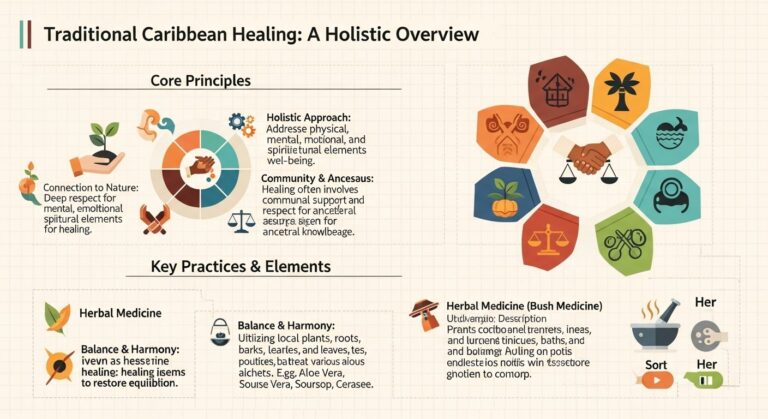
The practice of Caribbean meditation sounds extends beyond mere musical enjoyment; it is deeply interwoven with a broader tradition of holistic health and wellness indigenous to the Caribbean islands. This connection elevates the experience, positioning reggae as a natural extension of ancestral healing practices.
How Does Reggae Connect to Ancestral Wisdom and Healing?
Reggae music’s origins are steeped in the cultural and spiritual traditions of the Caribbean, where a holistic approach to life has long prevailed. These traditions emphasize the interconnectedness of mind, body, and spirit, often incorporating elements like herbal medicine, community support, and rhythmic expression for healing. The Nyabinghi drumming, a traditional Rastafarian sacred rhythm, serves as a direct predecessor to reggae’s characteristic beats, used in communal gatherings for spiritual communion and collective healing. This historical context imbues reggae with an inherent wisdom that goes beyond entertainment, tapping into centuries of knowledge about fostering well-being through sound and communal resonance.
How Can Breathwork and Movement Be Integrated with Reggae Meditation?
The rhythmic nature of reggae music lends itself beautifully to guided meditation and breathwork. Its consistent tempo provides a natural cadence for synchronized breathing exercises, helping to regulate the respiratory system and deepen the breath. For those who find stillness challenging, reggae can also be integrated into gentle movement practices such as slow yoga flows, conscious dance, or tai chi. The music’s fluid rhythms encourage natural, unforced movement, allowing the body to release tension and energy to flow freely, transforming the meditative experience into a full-body engagement with sound and motion.
How Does Reggae Compare to Other Meditative Music Genres?
While many genres are used for meditation—from classical to ambient electronic—reggae offers a unique proposition. Unlike the ethereal, often formless quality of ambient soundscapes, reggae possesses a distinct, tangible pulse that acts as a consistent anchor for the mind. Compared to the structured complexity of classical music, reggae’s repetition and moderate tempo make it more accessible for direct rhythmic entrainment. Its blend of organic instrumentation, spiritual lyrical depth (when present), and culturally rich origins provides a vibrant yet calming alternative that resonates with a sense of authenticity and human connection often absent in purely instrumental or synthetic meditative music.
Conclusion: How Can You Embrace the Rhythmic Path to Inner Peace with Reggae?
The journey into Reggae for Meditation reveals a powerful and accessible pathway to enhanced well-being. By harnessing the genre’s distinctive rhythmic structures, profound basslines, and rich spiritual heritage, individuals can cultivate deeper states of mindfulness, significantly reduce stress, and foster a more profound connection to their inner selves and the world around them. This unique fusion of sound and spirit offers a vibrant, culturally resonant alternative to traditional meditative practices, inviting everyone to experience the transformative power of Caribbean rhythms.
Whether seeking to calm a busy mind, regulate emotions, or simply find a moment of peace, the calming influence of reggae music provides a consistent, grounding, and uplifting presence. Embrace this rhythmic journey and discover how the soul-stirring sounds of the islands can guide you to a more centered and harmonious existence. Explore more about the therapeutic power of music on our main Music Wellness Hub.
Related Concepts & Further Reading
- Rastafarianism: A spiritual and socio-political movement that originated in Jamaica, deeply influencing reggae music’s themes of unity, spirituality, and social justice.
- Nyabinghi Drumming: Traditional sacred drumming of the Rastafari movement, considered a direct precursor to reggae rhythms and used for spiritual ceremonies and meditation.
- One-Drop Beat: The foundational rhythmic pattern in reggae, characterized by the bass drum and snare hitting on the third beat of a 4/4 measure, creating a laid-back, syncopated feel.
- Alpha Brain Waves: Brainwave frequencies (8-12 Hz) associated with relaxed wakefulness, meditation, and a state of calm alertness, often induced by music with moderate tempos.
- Dub Music: A subgenre of reggae focused on instrumental remixes, heavy use of echo, reverb, and delay, creating expansive, immersive soundscapes ideal for deep contemplation.
Sources & References
- Levitin, D. J. (2014). *The Organized Mind: Thinking Straight in the Age of Information Overload*. Dutton. (Relevant for understanding music’s impact on cognitive function and stress).
- Chanda, M. L., & Levitin, D. J. (2013). The neurochemistry of music. *Trends in Cognitive Sciences*, 17(4), 179-193. (Provides insights into dopamine, serotonin, and physiological responses to music).
- Small, C. (1998). *Musicking: The Meanings of Performing and Listening*. Wesleyan University Press. (Explores the cultural and social aspects of music, relevant to reggae’s roots).
- Staples, S. (2018). *Culture Clash: The Story of Reggae*. BookBaby. (Historical context of reggae and its cultural significance).
About the Author
Dr. Nia Thompson, Holistic Wellness Advocate & Music Ethnobotanist — Dr. Nia passionately explores the ancestral healing traditions of the Caribbean, blending herbal wisdom with the rhythmic power of island music to foster holistic well-being.
Reviewed by Marcus ‘Mighty’ Grant, Cultural Wellness Journalist — Last reviewed: March 27, 2026
Reviewed by Marcus ‘Mighty’ Grant, Cultural Wellness Journalist — Last reviewed: March 27, 2026