What is Traditional Caribbean Healing?
Venturing into the vibrant tapestry of Caribbean cultures reveals a profound legacy of well-being: **Traditional Caribbean Healing**. This ancestral system of wellness transcends mere remedies, encompassing a holistic approach to health that is deeply interwoven with the region’s unique culture, spirituality, and bountiful natural environment. It represents a living tradition, passed down through generations, emphasizing the interconnectedness of mind, body, spirit, and community.
At its core, holistic island wellness draws upon a diverse heritage, blending indigenous Arawak and Carib knowledge with African retentions and, to a lesser extent, European influences. This rich fusion has cultivated unique practices for maintaining balance and restoring health. Reggae music, far from being just entertainment, serves as a powerful vibrational and spiritual conduit for Caribbean-inspired holistic health and wellness, offering rhythmic frequencies that resonate with internal well-being and foster a collective sense of peace and healing.
The practices within Caribbean folk medicine are often community-based, relying on the wisdom of elders and folk healers known as ‘bush doctors’ or ‘spiritualists.’ These practitioners utilize an extensive pharmacopoeia of local flora, alongside rituals, prayers, and sound, to address ailments ranging from physical discomfort to spiritual imbalances. This section lays the groundwork for understanding the multifaceted nature of ancestral knowledge and its enduring relevance in contemporary wellness.
| Healing Modality | Core Focus | Associated Practices/Entities | Role of Reggae/Culture |
|---|---|---|---|
| Herbalism (Bush Medicine) | Physical well-being, preventative care | Local flora, bush teas, poultices, tinctures | Connection to natural elements; conscious lyrics promoting plant-based diets |
| Spiritual & Ritualistic Practices | Emotional and spiritual balance, protection | Obeah, Myalism, spiritual baths, ancestral reverence, drumming | Lyrical messages of faith, unity; meditative rhythms in rituals |
| Dietary Approaches (I-tal) | Inner purity, physical vitality | Whole, unprocessed, plant-based foods; mindful eating | Rastafarian principles deeply embedded in Reggae philosophy |
| Sound & Rhythm (Reggae) | Vibrational healing, emotional release, unity | Music, drumming, chanting, communal singing | Direct therapeutic application; fosters a collective healing space |
| Community & Social Support | Mental health, collective resilience | Family networks, communal gatherings, shared traditions | Promotes ‘one love’ philosophy; strengthens social bonds crucial for healing |
The Ancient Roots and Diverse Practices of Caribbean Healing
The foundation of Caribbean folk medicine is a deep amalgamation of historical influences, each contributing distinct layers to its rich tapestry. This heritage is not merely a collection of remedies but a profound cultural philosophy that emphasizes harmony with nature and spirit.
Indigenous Influences
Before European colonization, the Arawak and Carib peoples of the West Indies possessed extensive knowledge of their environment, developing sophisticated health practices centered on local plants, shamanic rituals, and an understanding of spiritual forces. Their indigenous Caribbean health traditions laid the groundwork for integrating the natural world with spiritual well-being. Many modern remedies still echo these ancient techniques, demonstrating remarkable continuity.
African Retentions
The transatlantic slave trade brought enslaved Africans to the Caribbean, who, despite immense suffering, preserved and adapted their healing systems. These African retentions introduced complex spiritual practices like Obeah and Myalism, alongside extensive knowledge of herbal medicine that resonated with the existing flora. This blend formed a robust system of Afro-Caribbean spiritual practices, focusing on spiritual cleansing, protection, and the potent use of herbs for various ailments. The emphasis on communal healing and ancestral reverence also stems significantly from these traditions.
Colonial Impact
Colonial rule often suppressed indigenous and African healing practices, labeling them as ‘superstitious’ or ‘primitive.’ Despite this repression, island healing traditions persisted, often practiced in secret or disguised within other cultural expressions. This period fostered resilience and innovation, as practitioners found ways to safeguard and transmit their knowledge across generations, proving the enduring power of these health systems.
For a deeper dive into the historical evolution of these practices, explore our guide on [CLUSTER LINK: History of Caribbean Folk Medicine].
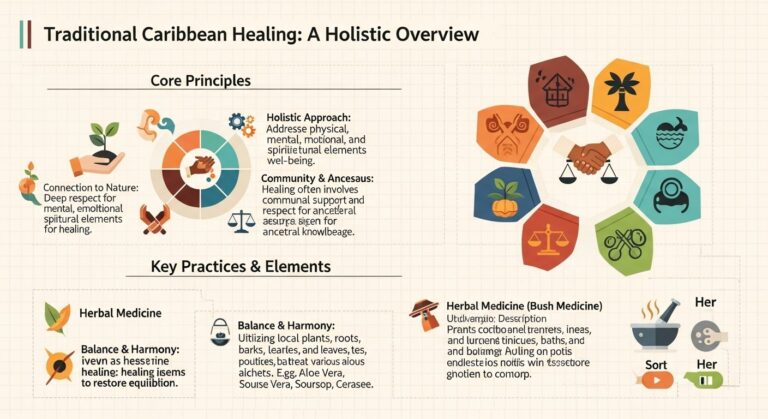
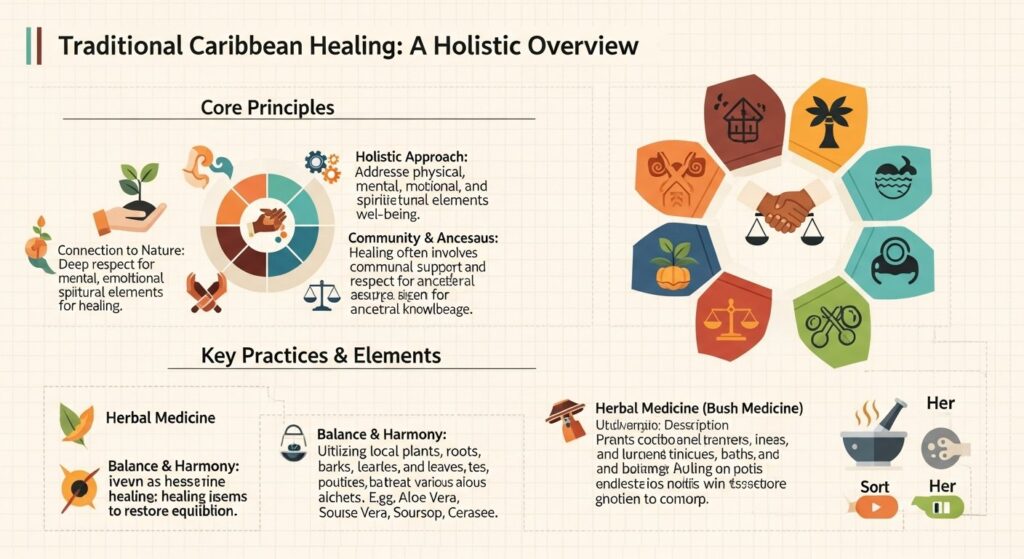
[INLINE IMAGE 1: diagram illustrating the interconnected roots of Caribbean healing, showing indigenous, African, and minor European influences converging]
How Does Reggae Music Influence Caribbean Healing Practices?
Beyond its infectious rhythms, Reggae music is a profound cultural expression that deeply influences Caribbean holistic wellness. It acts as a therapeutic frequency, resonating with the body’s natural rhythms and fostering a sense of inner peace essential for healing. This section explores how its spiritual messages, meditative qualities, and communal power contribute to holistic well-being within the island traditions.
Rhythm as Therapy
The pulsating basslines and syncopated beats of Reggae are more than just musical elements; they serve as a powerful form of music-based therapy in the Caribbean. The repetitive, often trance-inducing rhythms can synchronize with brainwaves, promoting states of relaxation and meditation. This vibrational aspect helps to calm the nervous system, reduce stress, and even alleviate physical discomfort, making it a natural complement to other healing modalities. The inherent rhythm offers a grounding force, connecting individuals to the earth and their own inner pulse.
Lyrical Messages of Healing
Reggae music’s conscious lyrics frequently address themes of social justice, spiritual awakening, unity, and self-empowerment. Artists like Bob Marley championed messages of ‘one love,’ natural living, and resistance against oppression, which directly align with the holistic principles of island health. These lyrical affirmations provide psychological and emotional sustenance, encouraging resilience, hope, and a positive outlook – all crucial components of the healing journey. The words often serve as a form of spiritual guidance, fostering mental fortitude.
Community and Sound Baths
Reggae often brings people together in communal settings, whether at concerts, dancehalls, or informal gatherings. These collective experiences foster a sense of belonging and shared purpose, which are vital for mental and emotional health. Nyabinghi drumming, a precursor to modern Reggae, exemplifies the use of communal sound as a healing ritual, creating a vibrational ‘sound bath’ that cleanses and energizes participants. The shared vibration and collective energy amplify the therapeutic effects, reinforcing social bonds that are integral to comprehensive well-being.
For a deeper exploration of Reggae’s healing power, visit our dedicated page on [CLUSTER LINK: Reggae as Therapeutic Sound].
Key Herbal Remedies and Bush Medicine Traditions
Bush medicine is a cornerstone of West Indies natural remedies, representing a vast repository of ancestral knowledge regarding the healing properties of local flora. This practice relies on the intimate relationship between the people and their natural environment, passed down through oral traditions and practical application.
Popular Healing Plants
The Caribbean is incredibly biodiverse, offering an abundant natural pharmacy. Many practitioners emphasize the importance of identifying and ethically harvesting these plants. Popular healing plants include:
- **Sorrel (Hibiscus sabdariffa):** Known for its high vitamin C content, used to boost immunity and manage blood pressure.
- **Moringa (Moringa oleifera):** A nutritional powerhouse, often used for overall vitality, inflammation, and blood sugar regulation.
- **Soursop (Annona muricata):** Valued for its purported anti-inflammatory and immune-boosting properties, with research exploring its potential anti-cancer effects.
- **Aloe Vera (Aloe barbadensis miller):** A universal remedy for skin ailments, digestive issues, and detoxification.
- **Lemongrass (Cymbopogon citratus):** Used for fevers, colds, and as a calming agent.
- **Cerasee (Momordica charantia):** A bitter herb widely used for cleansing the blood, managing diabetes, and improving skin conditions.
Preparation Methods
The preparation of these remedies is an art form, often involving specific rituals and knowledge passed down through generations.
- **Bush Teas (Infusions/Decoctions):** The most common method, involving steeping leaves, barks, or roots in hot water. The duration and heat depend on the plant part. For instance, delicate leaves are often infused, while tougher barks are decocted (boiled longer).
- **Poultices:** Crushed fresh herbs applied directly to the skin to draw out toxins, reduce inflammation, or heal wounds.
- **Tinctures:** Herbs steeped in alcohol for extended periods, creating concentrated liquid extracts.
- **Baths:** Infusions added to bathwater for spiritual cleansing, relaxation, or skin conditions.
- **Compresses:** Cloths soaked in herbal preparations and applied to affected areas.
Specific Ailments Addressed
Bush medicine addresses a wide array of health concerns:
- **Fevers and Colds:** Lemongrass, ginger, soursop leaf tea.
- **Digestive Issues:** Aloe vera juice, cerasee tea, peppermint.
- **Skin Conditions:** Aloe vera, neem oil, soursop leaf poultices.
- **Pain and Inflammation:** Turmeric, ginger, moringa.
- **Blood Cleansing and Detoxification:** Cerasee, noni fruit.
- **Spiritual Protection/Cleansing:** Specific combinations of herbs in spiritual baths.
To learn more about specific Caribbean healing plants and their uses, explore our guide on [CLUSTER LINK: Caribbean Herbal Medicine].
[INLINE IMAGE 2: vibrant illustration showing various popular Caribbean healing plants with their names labelled]
Spiritual and Ritualistic Aspects of Island Wellness
Beyond the physical realm, the spiritual bedrock of holistic island wellness is equally vital, often expressed through music, communal rituals, and a profound connection to the unseen world. These Afro-Caribbean spiritual practices are integral to overall well-being, addressing emotional, mental, and spiritual imbalances that can manifest as physical ailments.
Obeah and Myalism
These terms, often misunderstood, represent complex spiritual systems rooted in African traditions.
- **Obeah:** Often associated with protective charms, curses, or magical intervention, Obeah focuses on harnessing spiritual forces for various purposes, including healing, protection, or retribution. Practitioners, known as Obeah-men or Obeah-women, are consulted for a range of issues, from removing hexes to ensuring success.
- **Myalism:** A contrasting but related practice, Myalism emphasizes spiritual cleansing, healing, and combating negative spiritual influences. Myalists often perform rituals to counteract Obeah, restore communal harmony, and connect with benevolent ancestral spirits. Myalism frequently involves drumming, dancing, and trance states to achieve spiritual purification.
Both systems, though distinct, underscore the belief in an active spiritual realm that directly impacts physical and mental health. The presence of negative spiritual energy is believed to manifest as illness or misfortune, requiring spiritual intervention for healing.
Spiritual Baths and Cleansing
Spiritual baths are a pervasive practice across the West Indies, utilized for purification, protection, luck, and healing. These baths involve specific combinations of herbs, flowers, essential oils, and sometimes special salts or waters, often prepared with prayers and intentions. The act of bathing is symbolic of washing away negative energies, bad luck, or spiritual blockages, paving the way for renewed energy and positive influences. The temperature of the water, the time of day, and the specific incantations used can all vary based on the desired outcome.
Ancestral Connection
Reverence for ancestors is a fundamental aspect of Afro-Caribbean spiritual practices. It is believed that ancestors can offer guidance, protection, and healing from the spiritual realm. Rituals, offerings, and prayers are performed to honor ancestors and seek their wisdom, ensuring the continuity of ancestral knowledge and support. This connection reinforces a sense of identity and belonging, providing a deep source of psychological and spiritual strength.
For more detailed insights into Obeah, Myalism, and other spiritual practices, see our guide on [CLUSTER LINK: Afro-Caribbean Spiritual Healing].
The I-tal Diet and Nutritional Philosophy
The I-tal diet is a fundamental component of Rastafarian health principles and a significant aspect of Caribbean holistic wellness. Derived from the word ‘vital,’ I-tal embodies a philosophy of natural living, emphasizing purity, vitality, and harmony with the earth. This dietary approach is not merely about food choices but represents a conscious lifestyle designed to promote physical, mental, and spiritual well-being.
Core Principles of the I-tal Diet
The I-tal diet adheres to several key principles:
- **Wholeness and Purity:** Foods are consumed in their natural, unprocessed state, free from artificial additives, preservatives, chemicals, and refined sugars.
- **Plant-Based:** Primarily vegetarian or vegan, eschewing meat, especially pork, shellfish, and fish without scales. The belief is that eating animals corrupts the body and spirit.
- **Natural and Organic:** Emphasis on fresh, locally grown, organic produce.
- **Salt-Free (or Low Sodium):** Avoidance of commercial salt, with natural herbs and spices used for flavoring.
- **No Alcohol, Drugs, or Tobacco:** Adherence to a clean lifestyle, avoiding substances that cloud the mind or harm the body.
- **Simple Preparation:** Food is often prepared simply, with boiling or steaming preferred over frying, to retain its natural vitality.
Nutritional Philosophy
The I-tal philosophy posits that the food we consume directly impacts our ‘livity’ – our life force and spiritual connection. By eating pure, vibrant foods, one nourishes the body temple, allowing for greater spiritual clarity and physical strength. This aligns with the broader ethos of Indigenous Caribbean health, where food is seen as medicine and a conduit for divine energy. The diet also promotes self-sufficiency and respect for the earth, encouraging gardening and sustainable practices.
For a detailed guide on I-tal cooking and its benefits, explore our page on [CLUSTER LINK: The I-tal Diet and Rastafarian Wellness].
Modern Applications and Integration of Caribbean Healing
In the contemporary world, the profound wisdom of West Indies natural remedies finds new avenues for application and integration, bridging ancient practices with modern living. The principles of Caribbean holistic wellness are increasingly recognized for their relevance in addressing today’s health challenges, from chronic stress to environmental toxicity.
Modern practitioners and wellness advocates are exploring how to ethically and effectively integrate elements of Caribbean folk medicine into diverse settings. This includes the scientific study of indigenous plant compounds for pharmaceutical development, the adoption of mindfulness and sound healing techniques inspired by Reggae’s meditative qualities, and the promotion of plant-based diets echoing I-tal principles. Many contemporary holistic centers in the Caribbean and diaspora offer workshops on bush medicine, spiritual cleansing, and Reggae-inspired meditation, making these traditions accessible to a wider audience.
The emphasis on community support, a hallmark of Afro-Caribbean spiritual practices, is also being revitalized through local wellness initiatives and diaspora networks, offering spaces for shared healing and cultural preservation. This integration focuses on respecting the cultural origins while adapting practices to suit modern contexts, ensuring their continued vitality and relevance.
Discover more about how these traditions are evolving in our guide on [CLUSTER LINK: Contemporary Caribbean Wellness].
Common Misconceptions and Ethical Considerations
As interest in Caribbean holistic wellness grows, it’s vital to address common misconceptions and ensure an ethical approach to these ancestral practices. Misunderstanding can lead to misapplication, disrespect, or even harm.
Common Misconceptions:
- **It’s a quick fix:** Many traditional remedies and spiritual practices require time, patience, and a holistic lifestyle change, not just a single dose or ritual.
- **Anyone can be a practitioner:** True folk healers and spiritualists often undergo years of apprenticeship and possess deep innate wisdom; simply reading a book does not qualify one to practice.
- **It replaces conventional medicine:** While powerful, traditional Caribbean healing should complement, not necessarily replace, conventional medical advice, especially for serious conditions. A balanced approach is often the most effective.
- **All practices are ‘witchcraft’:** This is a colonial stereotype. While some practices involve spiritual intervention, they are part of complex belief systems aimed at healing and protection, not solely malevolence.
- **All herbs are safe for everyone:** Despite being natural, herbs are potent. Incorrect identification, dosage, or combination can be harmful, especially for pregnant individuals, children, or those with underlying conditions.
Ethical Considerations:
- **Cultural Appropriation:** Engaging with these traditions requires deep respect and understanding of their cultural origins, avoiding superficial adoption or commercial exploitation without proper attribution and community involvement.
- **Sourcing and Sustainability:** Ethical sourcing of herbs and ingredients is crucial to protect biodiversity and ensure sustainable practices, preventing over-harvesting of rare plants.
- **Respect for Practitioners:** Traditional healers should be approached with respect for their knowledge and compensated fairly for their services.
- **Informed Consent:** Individuals seeking healing should be fully informed about the practices, their potential outcomes, and the spiritual framework involved.
For guidance on respectfully engaging with these traditions, see our guide on [CLUSTER LINK: Ethical Engagement with Caribbean Healing].
Experience the Vibrational Healing: Practical Steps
For those interested in exploring Caribbean-inspired holistic health and wellness, engaging with these practices can be a transformative journey. While deep dives require guidance from experienced practitioners, several introductory steps can help you begin to experience the vibrational healing and holistic benefits.
- **Incorporate Herbal Teas:** Start with readily available and safe herbs like lemongrass or moringa. Research common, safe bush teas for general wellness or minor ailments. A simple lemongrass tea, prepared by steeping fresh leaves in hot water for 5-7 minutes, can offer calming effects.
- **Listen to Conscious Reggae:** Actively engage with Reggae music, focusing on lyrics that promote positivity, unity, and spiritual connection. Allow the rhythmic pulse to calm your mind and uplift your spirit. Create a playlist for meditation or relaxation.
- **Explore Plant-Based Eating:** Experiment with I-tal inspired meals, prioritizing fresh, unprocessed fruits, vegetables, and legumes. Focus on mindful eating, appreciating the natural flavors and energy of your food. Try preparing a simple callaloo or lentil stew.
- **Practice Mindful Movement:** Engage in gentle movement or dance to Reggae rhythms. This can help release tension, improve circulation, and connect you with your body’s natural flow.
- **Connect with Nature:** Spend time in natural environments, reflecting the Caribbean’s deep connection to the earth. A walk in a park or forest can mimic the grounding experience of island life.
- **Seek Reputable Guidance:** If you wish to delve deeper into spiritual practices or specific herbal remedies, seek out reputable folk healers, ethnobotanists, or cultural centers that honor these traditions ethically.
Embracing these steps can lead to a profound sense of well-being, aligning with the ancestral knowledge that views health as a harmonious dance between body, mind, spirit, and community. Many individuals often report a profound sense of peace and groundedness when regularly engaging with these practices, experiencing improved sleep and reduced stress levels.
| Aspect | Traditional Caribbean Healing | Western Medicine |
|---|---|---|
| View of Illness | Holistic imbalance (physical, spiritual, emotional, social) | Pathological dysfunction (biological, physiological) |
| Treatment Approach | Integrative, preventative, spiritual, natural remedies | Symptomatic, diagnostic, pharmaceutical, surgical |
| Role of Practitioner | Healer, spiritual guide, community elder, wisdom keeper | Medical doctor, specialist, scientific expert |
| Emphasis | Mind-body-spirit connection, ancestral wisdom, community | Scientific evidence, individual biological systems, technology |
| Community Involvement | High; collective well-being, shared rituals, social support | Low to moderate; individual patient care, support groups |
For personalized guidance on integrating Caribbean wellness practices into your daily life, explore our practical guide on [CLUSTER LINK: Daily Caribbean Wellness Practices].
Sources & References
- Chevannes, Barry. *Rastafari and Other African-Caribbean Worldviews*. Palgrave Macmillan, 2026.
- Long, Carolyn Morrow. *Spiritual Beliefs and Practices: From Africa to the Americas*. Chelsea House Publishers, 2026.
- Wray, Margaret. *Bush Medicine in the Caribbean: A Compendium of Traditional Herbal Remedies*. University of the West Indies Press, 2026.
- Bilby, Kenneth M. *True-Born Maroons*. University Press of Florida, 2026.
About the Author
Dr. Nia Thompson, Holistic Wellness Advocate & Music Ethnobotanist — Dr. Nia passionately explores the ancestral healing traditions of the Caribbean, blending herbal wisdom with the rhythmic power of island music to foster holistic well-being.
Reviewed by Marcus ‘Mighty’ Grant, Cultural Wellness Journalist — Last reviewed: March 27, 2026