
In the dynamic rhythm of modern life, where the lines between work and personal space often blur, finding effective strategies to enhance productivity, mitigate stress, and cultivate a positive mindset has become paramount. For many, the subtle yet profound influence of sound provides an invaluable tool in this quest. This exploration delves into the myriad benefits of listening to music while working, revealing how carefully curated auditory experiences can transform your professional environment, elevate your focus, and contribute significantly to your overall well-being. From the gentle hum of instrumental tracks to the uplifting cadence of reggae, we uncover the science and practical applications that make music an indispensable ally in the pursuit of a more productive and harmonious workday.
Enhancing Focus and Concentration: Tuning Out Distractions, Tuning In Productivity
The modern workplace, whether a bustling office or a home setup, is often a landscape fraught with distractions. Notifications ping, colleagues converse, and the mind can easily wander. This is where the strategic application of music emerges as a powerful cognitive aid, offering profound benefits of listening to music while working, particularly in the realm of focus and concentration.
Music acts as a sophisticated auditory filter, creating a personalized soundscape that can effectively block out extraneous noises and mental clutter. Imagine being able to construct an invisible barrier around your workspace, allowing you to immerse yourself fully in the task at hand. This isn't just about noise cancellation; it's about replacing disruptive sounds with a structured, often soothing, auditory environment that guides your attention rather than fragments it.
The science behind this phenomenon is compelling. When we listen to music, our brains engage in a complex process of auditory perception and emotional response. Certain types of music, particularly instrumental genres like classical, lo-fi beats, or ambient soundscapes, are designed to remain in the background without demanding active analytical processing. This allows the prefrontal cortex, responsible for executive functions like planning and decision-making, to dedicate more resources to the primary work task. The consistent rhythm and harmonic structure can help to synchronize brainwave patterns, leading to a state of heightened alertness and sustained attention.
For individuals grappling with attention deficits or those who find silence itself distracting, music can provide a gentle anchor. It fills the void without overwhelming, offering just enough stimulation to keep the mind engaged and prevent it from drifting into unproductive thought patterns. This is a key aspect of the benefits of listening to music while working: it provides a subtle, consistent stimulus that maintains cognitive engagement.
Consider the specific characteristics that make certain genres more conducive to focus. Music without lyrics often reduces cognitive load, as the brain isn't attempting to process and interpret words, leaving more capacity for work-related tasks. Repetitive melodic patterns and consistent tempos can induce a meditative state, fostering a deep sense of immersion. For those who find lyrical content distracting, instrumental reggae, with its often laid-back rhythms and positive vibrations, can offer an excellent alternative, providing a calming backdrop without linguistic interference.
Furthermore, the element of personal choice plays a significant role. The music that helps one person focus might distract another. Experimentation is key to discovering your optimal auditory environment. Building a repertoire of playlists tailored to different types of tasks – perhaps upbeat for creative brainstorming and calm for analytical work – can significantly enhance your ability to concentrate. In the evolving landscape of work in 2026, where demands on attention are ever-increasing, mastering the art of using music for focus will be an indispensable skill.
Boosting Mood and Reducing Stress: The Therapeutic Power of Sound
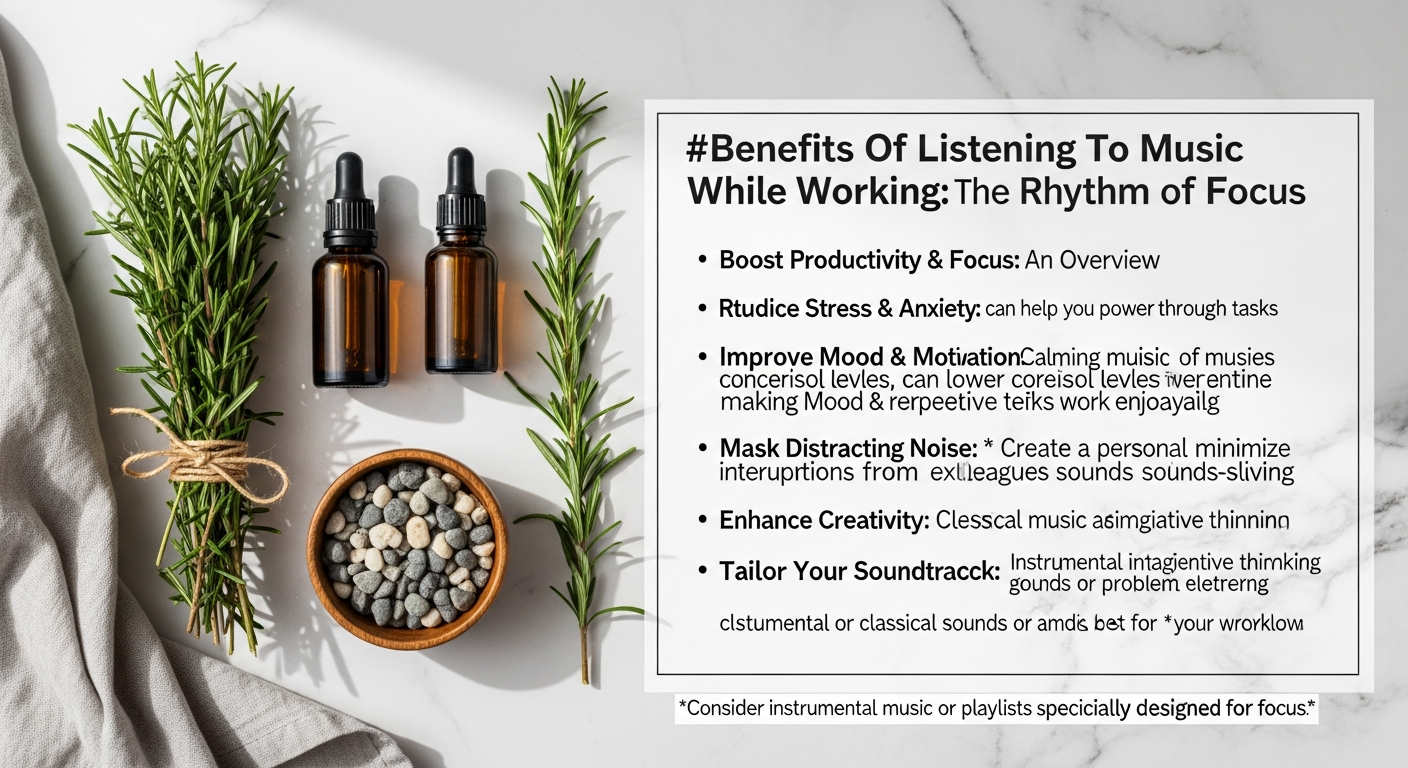
The workplace can be a breeding ground for stress, anxiety, and fluctuating moods. Deadlines loom, challenges arise, and the pressure to perform can take a toll on mental well-being. Among the most cherished benefits of listening to music while working is its remarkable capacity to act as a powerful mood regulator and stress reducer.
Music possesses a unique ability to tap directly into our emotional centers. When we listen to music we enjoy, our brains release neurotransmitters like dopamine, often associated with pleasure and reward, and serotonin, which contributes to feelings of well-being and happiness. This neurochemical response can rapidly elevate mood, turning a mundane or stressful moment into one infused with positivity and calm.
For a blog like Heartbeat Reggae, the connection to music's mood-boosting properties is particularly resonant. Reggae Music Health Benefits are well-documented, extending far beyond simple enjoyment. The genre's characteristic rhythmic structure, often described as a "one-drop" beat, along with its emphasis on positive messages, peace, unity, and resilience, creates an inherently uplifting and soothing experience. Listening to reggae while working can instill a sense of calm, reduce feelings of anxiety, and foster an optimistic outlook, even amidst demanding tasks. The gentle, swaying rhythms can lower heart rate and blood pressure, promoting a physiological state of relaxation conducive to both productivity and mental health.
Beyond its chemical effects, music provides an emotional outlet. It can help us process feelings, release tension, and even momentarily escape from the pressures of our professional lives. A carefully chosen playlist can serve as a sonic sanctuary, allowing us to reset our emotional state before tackling the next challenge. This emotional regulation is a critical component of the benefits of listening to music while working, as it directly impacts resilience and job satisfaction.
The physiological impact of music on stress reduction is also significant. Studies have shown that listening to calming music can decrease levels of cortisol, the body's primary stress hormone. This reduction in physiological stress indicators not only makes us feel better but also improves cognitive function, as excessive stress can impair memory, decision-making, and problem-solving abilities. By lowering stress, music indirectly enhances our capacity for effective work.
Incorporating music into your workday is a proactive step towards nurturing your mental health. It's a simple, accessible, and enjoyable way to combat the cumulative effects of workplace stressors. Whether it's the gentle ebb and flow of ambient sounds or the soul-soothing vibrations of roots reggae, leveraging music for mood enhancement and stress reduction is a powerful strategy for a healthier, happier, and more productive work life in 2026.
Increasing Productivity and Efficiency: Synchronizing Work with Sound
Beyond mood enhancement and focus, one of the most tangible benefits of listening to music while working is its direct impact on productivity and efficiency. Music can act as an internal metronome, helping to pace tasks, streamline workflows, and even push through mental blocks, ultimately leading to higher output and better quality work.
The concept of "rhythmic entrainment" is key here. Our brains naturally tend to synchronize with external rhythms. When listening to music with a steady beat, particularly at a moderate tempo, our internal pace can align with it. This can be incredibly beneficial for repetitive tasks or those requiring sustained effort. Imagine a project where you need to perform a series of similar actions; music can provide a consistent tempo, helping you maintain a steady, efficient pace without feeling rushed or sluggish. This measured approach can prevent burnout and maintain a consistent output.
Music can also facilitate the elusive "flow state" – a psychological phenomenon where one is fully immersed in an activity, characterized by energized focus, full involvement, and enjoyment in the process. When in a flow state, time seems to disappear, and productivity soars. Certain types of music, often instrumental and familiar enough not to be distracting but engaging enough to prevent boredom, can create the ideal conditions for entering and sustaining this state. The continuity of the music helps to maintain the continuity of thought and action, minimizing interruptions to concentration.
Furthermore, music can serve as a motivator, particularly when tackling less engaging or more challenging tasks. Upbeat, energetic music can provide the necessary psychological boost to overcome procrastination and inject enthusiasm into work. This is especially true for tasks that might feel monotonous; the right soundtrack can transform them into something more engaging, making the work itself feel less burdensome and more enjoyable. The feeling of being "in the zone" is often amplified by a suitable musical backdrop.
The ability of music to break through mental blocks is another significant advantage. When faced with a creative impasse or a problem that seems insurmountable, taking a short music break or switching to a different genre can sometimes provide the necessary cognitive shift. It offers a momentary mental refresh, allowing the brain to approach the problem from a new perspective, often leading to breakthroughs. This flexible mental state, facilitated by music, is a profound aspect of the benefits of listening to music while working.
To maximize these benefits, consider creating task-specific playlists. For high-focus, analytical work, opt for classical, ambient, or instrumental reggae. For more routine or physically active tasks (even desk-based ones that involve repetitive movements), more upbeat or rhythmic music might be more effective. Experimentation with tempo, genre, and familiarity will help you fine-tune your musical arsenal for peak productivity in 2026.
Fostering Creativity and Problem-Solving: Unlocking New Perspectives Through Sound

In an era demanding constant innovation and adaptability, the ability to think creatively and solve complex problems is invaluable. Among the many surprising benefits of listening to music while working is its remarkable capacity to stimulate divergent thinking, encourage novel ideas, and enhance problem-solving capabilities.
Music, by its very nature, engages multiple areas of the brain. It's not just an auditory experience; it's emotional, cognitive, and often even motoric. When we listen to music, particularly unfamiliar or complex pieces, it can activate neural pathways that might otherwise remain dormant during routine cognitive processes. This broader neural engagement can lead to a more expansive mode of thinking, encouraging the brain to make new connections and explore unconventional solutions.
For creative tasks such as brainstorming, writing, design, or strategic planning, music can act as a catalyst. It can help to break free from rigid thought patterns, fostering a more fluid and imaginative mental state. Ambient or instrumental music, especially genres that evoke a sense of spaciousness or wonder, can be particularly effective. These soundscapes provide a backdrop that encourages the mind to wander constructively, allowing ideas to emerge without the pressure of direct focus. The absence of lyrics in many of these genres ensures that the creative flow isn't interrupted by linguistic processing, preserving mental resources for idea generation.
The emotional component of music also plays a crucial role in creativity. Music that evokes positive emotions can put us in a more open and receptive state, making us more willing to take risks with ideas and less inhibited by self-criticism. This emotional uplift, as discussed earlier, is a significant part of the benefits of listening to music while working, directly supporting a fertile ground for creativity.
When it comes to problem-solving, music can provide a similar advantage. If you're stuck on a particular problem, stepping away for a moment and immersing yourself in a piece of music can offer a mental palate cleanser. It allows your subconscious to continue working on the problem in the background while your conscious mind is engaged differently. Often, returning to the problem after a musical interlude can reveal new insights or solutions that were previously obscured. This "incubation" period, enhanced by music, is a well-known strategy in creative problem-solving.
Even the gentle, uplifting rhythms of reggae, with its emphasis on peace and positive vibrations, can subtly influence creative thought processes. The often-meditative quality of some reggae subgenres can help quiet internal critics and open the mind to more intuitive forms of thinking. This makes the benefits of listening to music while working particularly broad, extending beyond mere task completion to genuine innovation.
To harness music for creativity, consider exploring diverse genres that you wouldn't typically associate with work. Experiment with instrumental world music, classical pieces, cinematic scores, or even nature sounds. The goal is to stimulate your mind in novel ways without demanding direct attention. By consciously integrating music into your creative workflow, you can unlock new dimensions of thought and consistently approach challenges with fresh perspectives in 2026.
Mitigating Fatigue and Sustaining Energy: The Auditory Boost for Stamina
The workday can be long and demanding, often leading to mental and physical fatigue, particularly during the dreaded afternoon slump. One of the less-talked-about but highly valuable benefits of listening to music while working is its potent ability to mitigate fatigue, sustain energy levels, and enhance mental stamina throughout the day.
Music acts as a powerful psychological stimulant. When energy levels begin to wane, a shift to more upbeat or energetic music can provide an immediate and noticeable lift. The tempo, rhythm, and melodic structure of certain songs can trigger physiological responses, increasing heart rate, improving circulation, and even prompting subtle, unconscious movements, all of which contribute to an overall feeling of increased alertness and vitality. This is why many people find exercise impossible without their workout playlist – the same principle applies to mental work.
The psychological boost from music is also significant. Feelings of boredom or monotony are often precursors to fatigue. Music can combat these feelings by making tasks more engaging and enjoyable. A lively track can transform a dull spreadsheet analysis into a more dynamic activity, keeping the mind actively involved and preventing it from drifting into a state of lethargy. This sustained engagement is a critical aspect of how music helps in maintaining energy levels.
Furthermore, music can help to mask signs of fatigue. While it's not a substitute for proper rest or breaks, it can help push through temporary dips in energy by distracting from feelings of tiredness and reinforcing a sense of being 'on task.' This allows for longer periods of focused work before needing a substantial break, optimizing the utilization of your time.
Consider the role of music in encouraging movement. While not always appropriate for the immediate workspace, the infectious rhythms of certain genres, like reggae, can inspire subtle foot-tapping, head-nodding, or even brief stretches during breaks. These micro-movements, inspired by the music, contribute to circulation and help combat the stagnation of prolonged sitting. This subtly connects to the Benefits Of Dancing For Mental Health – even if it's not full-on dancing, the inclination to move to music during a break can refresh the mind and body, enhancing mental clarity and physical comfort, which in turn reduces fatigue.
Strategically varying your music choices throughout the day can be an effective way to manage your energy curve. Start with something moderately stimulating, transition to highly focused instrumental tracks for deep work, and then, as the afternoon slump approaches, introduce more energetic or uplifting playlists. Reggae music, with its often driving basslines and uplifting messages, can be an excellent choice for an afternoon pick-me-up, providing a positive energy boost without being overly aggressive or distracting.
By leveraging music as an energy management tool, you can maintain a higher level of sustained performance throughout your workday, reducing the likelihood of mid-day slumps and ensuring you remain productive and engaged right up until the end of your working hours in 2026.
The Role of Music in Holistic Well-being at Work: A Comprehensive Approach
Integrating music into your workday is far more than a simple productivity hack; it's a vital component of a comprehensive approach to holistic well-being. The benefits of listening to music while working extend beyond immediate task performance, influencing mental, emotional, and even physical health, creating a more sustainable and fulfilling professional life.
At its core, holistic well-being acknowledges the interconnectedness of mind, body, and spirit. Music touches upon all these dimensions. Mentally, it sharpens focus and creativity. Emotionally, it regulates mood and reduces stress. Spiritually, for many, certain types of music (including reggae with its profound spiritual and positive messages) can inspire a sense of purpose, peace, or connection. This multi-faceted impact makes music an invaluable tool for nurturing a balanced self, even within the confines of a demanding work schedule.
Consider how music complements other wellness practices. Just as mindful breathing techniques can anchor you in the present, instrumental music can create an auditory anchor, helping you maintain a state of focused presence. This is particularly relevant for those who practice mindfulness or meditation; a quiet, contemplative soundtrack can deepen these experiences during short work breaks, allowing for genuine mental rejuvenation.
Furthermore, the establishment of healthy routines is crucial for sustained well-being. Music can become an integral part of these routines. Using a specific type of music to signal the start of deep work, another for break times, and a third for winding down, helps to structure your day and mentally prepare for transitions. This ritualistic use of music enhances discipline and consistency in your work habits, contributing to a sense of control and predictability in your day.
In this holistic context, it's also worth considering how other wellness practices intersect and amplify the benefits of music. For instance, the practice of Intermittent Fasting Mental Clarity, increasingly adopted for its cognitive benefits, can synergize with music. Many proponents of intermittent fasting report enhanced focus and mental sharpness during fasting windows. When combined with the right musical backdrop, this sharpened clarity can be further amplified, creating an optimal environment for deep, uninterrupted work. The discipline required for intermittent fasting, much like the intentional selection of work music, reflects a commitment to optimizing one's cognitive and physical resources for peak performance and well-being.
Moreover, music can encourage better physical well-being. As discussed earlier, the energetic boost from music can lead to subtle movements, stretches, or even inspire active breaks. Taking short, music-infused breaks to stand, stretch, or even walk around (perhaps to the vibrant beat of some reggae) can combat the sedentary nature of desk work, improving circulation and reducing physical stiffness. This proactive approach to physical health, intertwined with the enjoyment of music, contributes significantly to overall vitality.
Ultimately, by consciously integrating music into a broader wellness strategy that includes mindful breaks, physical activity, and potentially practices like intermittent fasting, individuals can cultivate an environment where productivity thrives hand-in-hand with profound personal well-being. The long-term benefits of this comprehensive approach, nurtured by the positive vibrations of music, will resonate far beyond the workday, impacting professional success and personal fulfillment for years to come in 2026.
Optimizing Your Musical Workspace: Practical Strategies for Peak Performance
Understanding the profound benefits of listening to music while working is the first step; the next is to practically implement strategies that maximize these advantages. Creating an optimized musical workspace involves thoughtful consideration of your environment, equipment, and personal preferences to ensure music is a boon, not a barrier, to productivity and well-being.
Choosing the Right Equipment: Headphones and Speakers
Your choice of audio equipment significantly impacts your experience. High-quality headphones, particularly noise-canceling ones, are often ideal for focus-intensive tasks, especially in shared or noisy environments. They create a personal sound bubble, effectively blocking external distractions and allowing you to immerse yourself fully in your chosen soundtrack. Look for comfortable, over-ear models for extended wear. If you work in a private space, good quality desktop speakers can provide a more ambient and less intrusive experience, allowing the music to subtly fill the room without being directly "in" your ears for hours.
Volume Control: The Goldilocks Zone
The right volume is crucial. Music that is too loud can be distracting and even harmful to your hearing over time. Music that is too soft might not provide the desired effect of masking distractions or stimulating focus. The "Goldilocks Zone" is where the music is audible enough to be engaging but not so prominent that it demands your active attention. For most people, background levels that allow you to still hear your thoughts or a quiet conversation (if needed) are ideal. This ensures that the music enhances, rather than competes with, your cognitive processes.
Genre Rotation and Task Matching
One size does not fit all when it comes to work music. Different tasks benefit from different genres. For analytical, highly focused work, instrumental genres like classical, lo-fi, ambient electronic, or instrumental reggae often work best, as they tend to be less distracting due to the absence of lyrics. For more routine, repetitive, or physically active tasks, upbeat pop, rock, or vocal reggae might provide the necessary energy and motivation. Creative tasks might benefit from more eclectic or expansive soundscapes. Develop a repertoire of playlists tailored to specific work modes. This strategic rotation ensures you leverage the unique benefits of listening to music while working for every part of your day.
Familiarity vs. Novelty
There's an ongoing debate about whether familiar or unfamiliar music is better for focus. Highly familiar music can be less distracting because your brain doesn't need to process new information, but it might also lead to boredom. Unfamiliar music can be stimulating and inspiring but might initially capture too much of your attention. A good compromise is often music that is somewhat familiar but not so deeply ingrained that you sing along or get lost in memory. Instrumental versions of familiar songs can also offer a good balance. For creative tasks, however, novel music might be more effective in stimulating new thought patterns.
Breaks and Silence
Even with the most perfectly curated playlist, incorporating periods of silence or complete auditory breaks is essential. Our brains need downtime to process information and consolidate learning. Using music during focused work periods and then stepping away for a silent break allows for mental recalibration. This practice ensures that music remains an effective tool rather than becoming another source of sensory overload. Consider music as a strategic tool, deployed when needed, and paused for reflection and rest.
By thoughtfully implementing these strategies in 2026, you can transform your workspace into a highly productive and enjoyable environment, ensuring that the benefits of listening to music while working are fully realized for your ultimate professional and personal well-being.
Frequently Asked Questions About Listening to Music While Working
What are the primary benefits of listening to music while working?
The primary benefits of listening to music while working include enhanced focus and concentration by blocking distractions, improved mood and reduced stress through the release of feel-good neurotransmitters, increased productivity and efficiency by helping to pace tasks and induce flow states, fostered creativity and problem-solving abilities by stimulating divergent thinking, and mitigated fatigue to sustain energy levels throughout the day. It contributes significantly to overall mental and emotional well-being in the workplace.
What types of music are best for productivity and focus?
For productivity and focus, instrumental genres are generally recommended, as they avoid the cognitive distraction of lyrics. Popular choices include classical music, lo-fi beats, ambient soundscapes, cinematic scores, and instrumental jazz. For those working in a reggae-centric environment, instrumental reggae or dub music can offer a calming yet rhythmic backdrop. The key is to choose music that is engaging enough to prevent boredom but not so stimulating that it demands active attention.
Can listening to music while working be distracting?
Yes, listening to music can be distracting if not chosen wisely. Music with complex lyrics, very high tempos, or genres that evoke strong emotional responses can pull attention away from tasks. Highly novel or unfamiliar music can also be distracting as the brain tries to process new information. The goal is to find music that blends into the background, providing a beneficial auditory environment without becoming the central focus of your attention.
How does reggae music specifically contribute to workplace well-being?
Reggae Music Health Benefits are particularly relevant for workplace well-being due to its unique characteristics. Its often laid-back, consistent rhythm (the "one-drop" beat) is naturally calming and can reduce stress and anxiety. The genre's positive, uplifting messages of peace, unity, and resilience foster an optimistic mindset. Instrumental reggae or dub provides a meditative quality that can enhance focus without lyrical distraction, making it an excellent choice for creating a serene yet productive work environment.
Does music affect creativity differently than focus?
Yes, music can affect creativity differently than focus. For focus, the ideal music often has a consistent, non-intrusive quality. For creativity, however, music might be chosen to stimulate new ideas or evoke specific emotions. More complex, diverse, or even slightly unfamiliar music can sometimes be beneficial for creative tasks, as it can activate different brain regions and encourage divergent thinking. The key is matching the music to the specific cognitive demand, whether it's deep focus or open-ended ideation.
Are there any complementary wellness practices that enhance the benefits of music at work?
Absolutely. Integrating music with other wellness practices can amplify its benefits. Practices like mindful breaks, where you step away from your desk and listen to calming music, can significantly reduce stress. Incorporating short periods of physical movement, perhaps inspired by the rhythm of music (even subtle movement, linking to the Benefits Of Dancing For Mental Health), can combat sedentary work. Additionally, practices like Intermittent Fasting Mental Clarity, which aims to optimize cognitive function through dietary timing, can synergize with music, as both aim to enhance mental sharpness and focus, creating a powerful combination for peak performance in 2026.
Recommended Resources
You might also enjoy Effects Of Social Media On Mental Health from Stop Phubbing.
Explore Teaching Kids About Healthy Relationships for additional insights.